RSS

Author Archives: Comics Forum

NNCORE Documentation Now Available

Documentation relating to the 2013 Nordic Network for Comics Research (NNCORE) Conference at the University of Helsinki has today been added to the Affiliated Conferences section of the Scholarly Resources archive on the Comics Forum website. The conference abstracts and program are available now, along with issue 7 of the NNCORE newsletter, which includes extensive discussion of the conference. All resources are free to download. The NNCORE website can be found here. Many thanks to Anne Magnussen and the NNCORE team for making these materials available.

To see the other conferences featured in the Affiliated Conferences archive, click here.

If you are a conference director and you would like to archive your material on the Comics Forum website, email us at comicsforum@hotmail.co.uk for details.

IH


Comics and Performance: From ‘Chalk Talks’ to ‘Carousel’ by Damon Herd

In March 2013 I hosted the inaugural DeeCAP (Dundee Comics/Arts/ Performance) as part of Dundee Comics Expo. Since then two other DeeCAPs have taken place, one in June as part of the International Graphic Novel and International Bande Dessinée Conference in Glasgow and Dundee, and the other as a comics workshop earlier this month, with students at the University of Dundee.

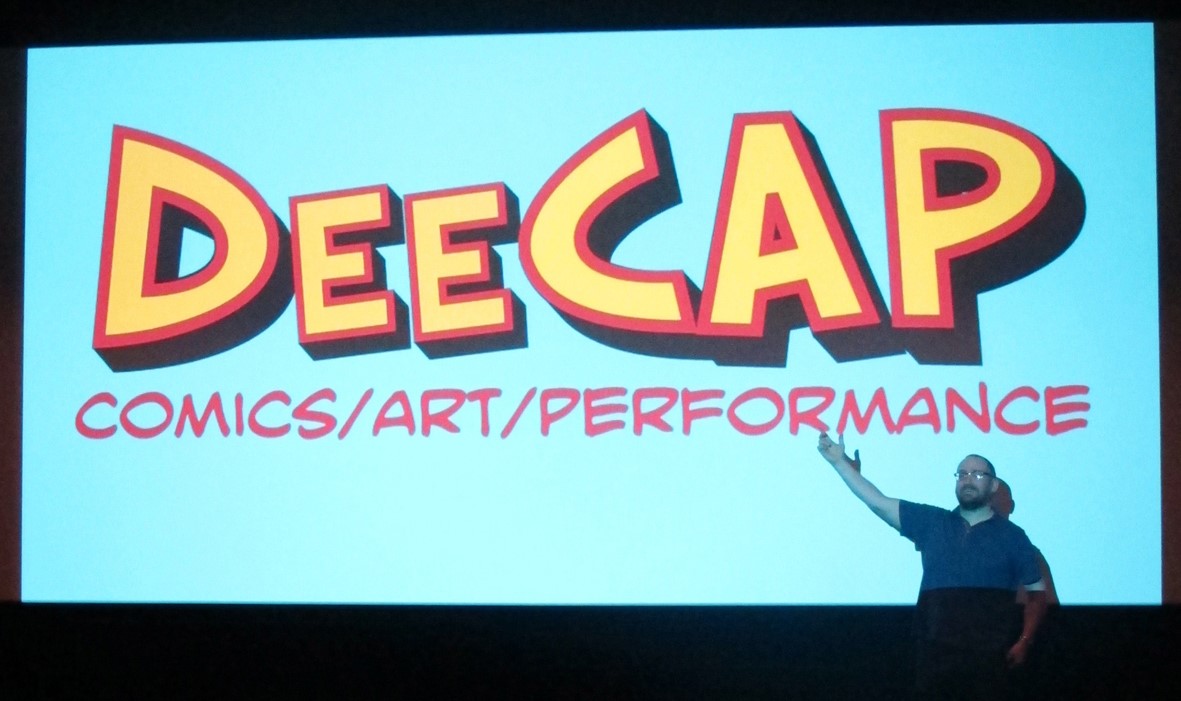
Figure 1 - Damon Herd introduces DeeCAP at Dundee Contemporary Arts 30th March 2013

Figure 1 – Damon Herd introduces DeeCAP at Dundee Contemporary Arts 30th March 2013

DeeCAP was initially conceived as a way for an audience to experience comics in a very different environment from the usual solitary reading of strips in books or tablets. At a DeeCAP show visual imagery, which can include comics, art or illustrations are projected onto a screen behind the presenters as they read out and interact with the pictures (See Figure 1).

The first event was hosted in a cinema at Dundee Contemporary Arts and the presenters were David Robertson, Andrew Godfrey and Rossi Gifford and myself. We all performed work that had previously been published in print form. I presented my short strip The Origin of Ticking Boy (2011), complete with a tick-tock soundtrack played through the cinema’s PA system. David read three strips from his anthology Dump (2010) with his excellent deadpan delivery. Rossi Gifford enthusiastically performed her story from Duncan of Jordanstone College of Art and Design’s publication Anthology Three (2013). The strip, about a young woman, Tegan, and her robot protector Galeron was an everyday tale of domesticity, romance, science fiction and horror. Rossi ran around the auditorium, circling the audience to energetically re-enact the events in her story. The last performance of the evening was the most theatrical. Andrew Godfrey recreated an excerpt from his comic The CF Diaries (2012), which chronicles his experiences of living with cystic fibrosis. Partly a homage to Bob Flanagan, made famous in the documentary SICK (1997), Andrew’s performance involved costumes, sound effects, music, and an audience singalong making it a fitting finale to the evening.

Last month at the IGN & IBDS Conference I hosted another DeeCAP at Dundee University for the conference attendees. There were some returning presenters but my main intention this time was to highlight the performative aspects. I played a live soundtrack on electric guitar to accompany my strip There Will Be Distance. A new participant this time was Naomi Bridges, a student on the Comics Studies MLitt at the University of Dundee. Naomi performed an autobiographical strip about her experiences with music and ended her piece by encouraging the whole audience to hum a low drone while she sang a cappella folk songs over the top. It was a very different way to experience the medium of comics.

The third DeeCAP was different; it took the form of a two-hour workshop for visiting students from the USA. With little knowledge beforehand of what they would be asked to do, the students were split into two groups and asked to come up with a short comic based on their experiences of Scotland so far. Impressively, they were up to the task and produced two very interesting autobiographical comics about seemingly mundane incidents. One element that was particularly interesting about the performances was how each group performed the comic as an ensemble, each person acting out and narrating different characters in the story. The group dynamic produced very different presentations than the individual readings at previous DeeCAPs, something to be encouraged at future events.

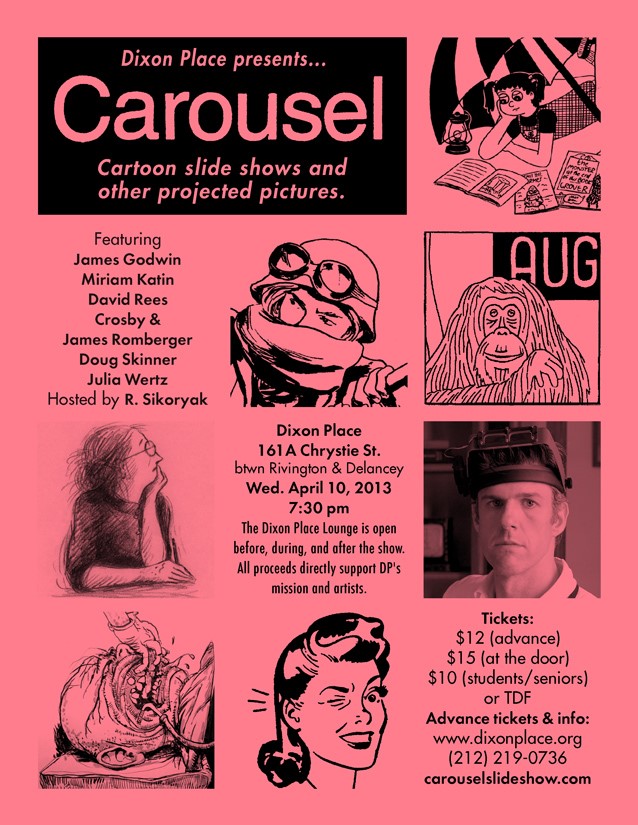
While DeeCAP was a new event in Dundee it is not a new idea. I was inspired by reading about Robert Sikoryaks’s Carousel performance evenings of ‘Cartoon Slide Shows and Other Projected Pictures’ in New York (See Figure 2). Sikoryak likens his event to a radio show with sound effects and music, which is combined with visual imagery. The co-mingling of words and pictures in comics is further mixed with sound and performance. Sikoryak has been hosting these ‘slide show readings by cartoonists and performers’ since 1997 and there are over 100 performers listed on the Carousel website including Gabrielle Bell, Peter Kuper, Dean Haspiel, Miriam Katin, Sam Henderson and Kate Beaton. Henderson has compared the shows to ‘stand-up comedy without the need to memorize material, or even stand up’ and notes how the opportunity to test material in front of an audience can be helpful in working out nuance and pacing (2012).

Figure 2 - Flyer advertising a Carousel show on April 10th 2013

Figure 2 – Flyer advertising a Carousel show on April 10th 2013

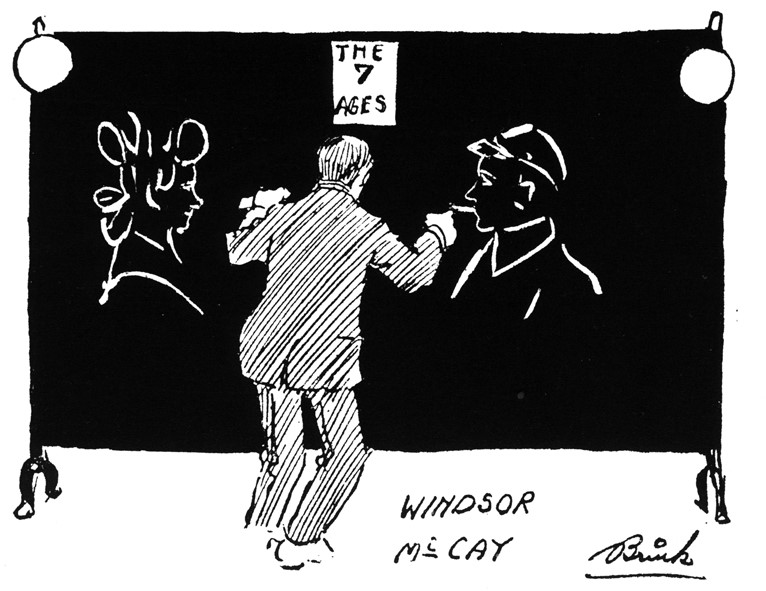
The idea of performing alongside images did not originate with Sikoryak either, although he is the most prolific contemporary promoter of the form. In the first decade of the twentieth century Winsor McCay began working in vaudeville to supplement his income as a newspaper cartoonist on strips such as Little Nemo in Slumberland. McCay, and other cartoonists such as Bud Fisher, were working as ‘lightning sketchers’ at ‘Chalk Talks’, a popular Victorian parlour entertainment that had ‘made the transition to the vaudeville stage in the late nineteenth century’ (Canemaker 2005). At Chalk Talks the performer would sketch quickly on a blackboard while telling a story, gradually adjusting the image as the tale progressed (See Figure 3).

Film will load fully before playing. For more on this film, including download options, click here.

McCay would later introduce animated films into his performances, the most famous being Gertie the Dinosaur (1914). McCay interacted with the dinosaur on stage, introducing Gertie to the audience who watched the animation behind him. Gertie left her cave slowly and walked towards them. She munched on a tree, fought with a mammoth and then ate an apple that McCay threw to her. In McCay’s hands the apple was a large cardboard prop that he slipped behind the screen a split-second before it appeared on film flying into Gertie’s mouth. The performance ended with McCay appearing to walk into the screen and climb on Gertie’s back as she walked off screen. By this time McCay’s act had become more of an interaction between performance and animation rather than comics but his comics work and animation continued to influence each other.

Figure 3 – A Winsor McCay Chalk Talk depicted by the staff artist for the Toledo Blade March 27th 1907

Figure 3 – A Winsor McCay Chalk Talk depicted by the staff artist for the Toledo Blade March 27th 1907

Contemporary comics creators embracing performance have included Alan Moore, who in 1995 staged a spoken word performance called The Birth Caul (A Shamanism of Childhood), which had music by David J and Tim Perkins. This was one of several collaborations between Moore and these musicians, which Moore intended to be ‘one off performances that would be preserved as a CD’ (Moore 2008). Unlike McCay’s performances or those featured in Carousel, The Birth Caul was not intended to have a visual element. The later comic book version by Eddie Campell was, according to Moore, an adaptation or ‘mix’ of the original piece, a reworking of ‘performance art into a more narrative medium’ (2008).

Like McCay and Moore, Ben Katchor, also a contributor to Carousel, initially did not use comics in his performances. In 1995 Katchor produced ‘radio cartoons’ of his strip Juilus Knipl, Real Estate Photographer for NPR. However Katchor has gone on to more fully embrace comics as performance with what he calls ‘Pictographic ballad operas’. Since 2004 he has collaborated with musician Mark Mulcahy on a series of contemporary music-theater productions that harken back to the ballad operas of 18th century England as well as the vaudeville tradition of McCay. The shows mix popular musical forms with visual projections. In these performances Mulcahy sings Katchor’s words as he plays his own music while behind them Katchor’s drawing are projected. Their 2009 commission A Checkroom Romance brings to mind the soundtrack to the Daniel Clowes comic Like a Velvet Glove cast in Iron by Victor Banana (cartoonist Tim Hensley) with its slightly jokey jazz and easy listening inflected tunes. It would be interesting to see Hensley’s soundtrack as a performance alongside Clowes’ images as it adds another creepy layer to the already sinister happenings in the book.

Comics performances have also recently turned up in unexpected areas. At the Narrative Future for Health Care Conference in June 2013 David Small was a keynote speaker. He started his presentation by playing a film of a passage from his autobiographical comic book Stitches (2009). The film played still images from the book along with an audio track of Small reading the text mixed with the music of Morton Feldman. Small talked later about the importance of Feldman’s music to him when making Stitches. Screened in the dark in a large auditorium and on a big screen with a good quality sound system, it was an absorbing and powerful way to experience Small’s work. On a lighter note, Paul Gravett’s keynote speech at the 2013 Graphic Medicine conference can be seen on the Graphic Medicine website. It is worth catching as in the middle of his speech Gravett does a very entertaining read through of the 1950s strip ‘Calling Nurse Abbott!’ from Girl comic, complete with different voices for each character.

There are potentially endless ways for comics to interact with performance. In Bart Beaty’s current research project Comics Off The Page, he is investigating ‘comics artists who are bringing comics into conversation with other art forms like dance, musical performance, painting, sculpture, and architecture’ (2012b). At the Comics & The Multimodal World Conference in Vancouver in June 2013 Beaty used his keynote speech to elaborate on the many ways that artists are stretching the boundaries of comics. Some artists have drawn live on stage alongside a band playing music adapting their drawing to the music. Others, such as Jerome Mulot and Florent Ruppert create site specific comics, and have used the audience as an interactive performance art element in the production of strips.

The act of performance does change the way in which we experience comics, and it also raises the question of whether we can still call them comics. The main difference between watching such a presentation and reading a comic is the loss of control of the narrative for the reader. They also cannot choose not to have sound effects, unless they bring earplugs. In this way, the experience has parallels with reading digital comics that have music or effects in them. At DeeCAP most presenters chose to show their strips one panel at a time, much like the ‘guided view’ in digital comics apps such as Comixology. This allows the audience time to soak up the information in each panel, an effect helped by the vastly increased size of the panels on the cinema screen. Crucially though, this stops the audience seeing other panels at the same time, causing the design of the page to become irrelevant. For the second DeeCAP event I created a new strip specifically to be performed and so considered it from the start as panel by panel rather than page by page. The audience can still influence the experience however. Like Sam Henderson, David Robertson noted on his blog that during the first DeeCAP he was able to ‘linger on any [images] that were getting a good laugh, or had some chicken fat I thought might be picked up by the audience’ (2013).

In his essay ‘Defining Comics?’ (2007) Aaron Meskin argues against essentialist definitions of comics and discusses the way that comics can be defined by ‘typical features’. For example, comics typically have panels but they are not a necessary feature. Meskin then discusses a move away from the comics ‘definitional project’ and suggests that ‘perhaps something is a comic just in case it is/was nonpassingly intended for regard-as-comic’ (2007: 376). This is a move towards defining comics along social rather than functional lines in a similar way to that proposed by Bart Beaty in Comics Versus Art (2012). Building on the theories of Pierre Bourdieu and George Dickie, Beaty proposes that ‘comics can be defined as objects recognized by the comics world as comics’ (2012b: 37). The comics performances presented in DeeCAP or Carousel retain many of Meskin’s ‘typical features’, such as panels or speech balloons so they can still be considered comics by that definition. However, they are also created by and for those in, what Beaty has termed, the ‘comics art world’ and so can also be considered as comics in a cultural sense.

This current wealth of comics and performance events show that the art form of comics continues to mutate and evolve. Choreographer Sidi Larbi Cherkaoui presented his latest work TeZuKa at Sadler’s Wells in London in 2011. A dance production based on the life and work of Osamu Tezuka, this multi-media event used Tezuka’s illustrations projected alongside the work of video artists, calligraphers, musicians and dancers. There are also other simpler forms of comics and performance that hark back to the Chalk Talks of vaudeville. Searching the phrase ‘Draw My Life’ on YouTube brings up a whole host of short videos uploaded by individuals telling the story of their lives while drawing it out on white boards like Victorian ‘lightning sketchers’. They continually edit and erase the drawings as the talk progresses, modern technology bringing an experience from the days of vaudeville into everybody’s home. At this moment there is also a boom in comics performance events, as well as Carousel and DeeCAP there are several other events in Portland, Oregon alone, including The Projects and the Comic Artist Nights at the Portland Opera. Along with comics performances such as Mulot and Ruppert these will hopefully lead to even more exciting and interesting ways to experience the comics medium.

References

Beaty, B. (2012a), Comics versus Art. Toronto: University of Toronto Press.

Beaty, B. (2012b), ‘Comics versus Art: Interview with Bart Beaty’ [online]; http://blog.comicsgrid.com/2012/08/comics-vs-art-interview-bart-beaty/, accessed 1st August 2013.

Canemaker, J. (2005), Winsor McCay: His Life and Art revised and expanded edition. New York: Harry N. Abrams, Inc.

Moore, A. (2008), Alex Fitch interviews Alan Moore [online] http://panelborders.wordpress.com/2008/10/23/panel-borders-from-hell-and-psycho-geography/, accessed Tuesday 23rd July 2013.

Henderson, S. (2012), Comics Aren’t Just For Eyes Anymore [online] http://www.tcj.com/comics-arent-just-for-eyes-anymore/, accessed 23rd July 2013.

Meskin, A. (2007), ‘Defining Comics?’ In The Journal of Aesthetics and Art Criticism (65:4) pp. 369- 379

Robertson, D. (2013), How To Read A Comic Aloud To An Audience [online], http://fredeggcomics.blogspot.co.uk/2013/04/how-to-read-comic-aloud-to-audience.html, accessed 1st August 2013.

Damon Herd is a researcher and artist, currently working towards a PhD in Fine Art at Duncan of Jordanstone College of Art and Design, University of Dundee. His research area is life narratives told in the comics medium, with a particular interest in the games authors play with truth. He has recently presented papers at The International Graphic Novel & International Bande Dessinée Society Conference in Glasgow and Comics & The Multimodal World Conference in Vancouver. He has been published in Studies in Comics, and on The Comics Grid, and is a contributor to the comics blog Graphixia.

[EDITOR’S NOTE: This article was updated on the 26th of August 2013 in response to comments (see below), and to incorporate additional relevant links.]

 
8 Comments

Posted by on 2013/08/21 in Uncategorized


Superior Unreliability: Thoughts on Narrators in Comics on the Occasion of Spider-Man 2012/13 by Stephan Packard

The following thoughts started off as a contribution to the online roundtable on unreliable narration in comics at the German Society for Comics Studies, ComFor. I am indebted to fellow roundtable participants Burkhard Ihme, Dietrich Grünewald, Elisabeth Klar, and Daniel Stein, as well as roundtable organizer Felix Giesa, for the engaging and inspiring discussion.

Spoiler Alert: Peter Parker is no longer the amazing Spider-Man; in fact, he is no longer Peter Parker. Doctor Octopus, one his longest-running villains, has taken possession of Peter’s body, is living in and through him and has been secretly continuing both his private and his secret identity. While Doctor Octopus’ Spider-Man has since launched into his own series, the Superior Spider-Man replacing (for now) the established Amazing Spider-Man, the original replacement of one mind by another took place around issue #698 of Amazing, late in 2012. More specifically, it took place before that issue starts, but readers only find out about it on the last few pages. Up to that point, the readers are deceived, much like the other characters surrounding Peter and Spider-Man. So the narration is unreliable in the strict sense of the prima facie interpretation requiring revision. But does the unreliable narration imply an unreliable narrator? And what can this unreliability tell us about the general problems of applying narratological concepts such as narration, narrator, and unreliability, which are typically formed vis-à-vis written lingual narrative, to comic books?

Read the rest of this entry »

 
Leave a comment

Posted by on 2013/08/12 in Guest Writers


Tags:

Call for Papers: Comics and Cultural Work

Guest Editor: Casey Brienza

‘All artistic work, like all human activity, involves the joint activity of a number, often a large number, of people. Through their cooperation, the art work we eventually see or hear comes to be and continues to be. The work always shows signs of that cooperation,’ wrote sociologist Howard Becker in his seminal monograph on cultural production Art Worlds. Comic art is no exception to Becker’s basic insight. Writers, illustrators, graphic designers, letterers, editors, printers, typesetters, publicists, publishers, distributors, retailers, and countless others are both directly and indirectly involved in the creative production of what is commonly thought of as the comic book.

Yet comics scholars all too often advance a narrow auteurist vision of production in their research. Names such as Art Spiegelman, Alan Moore, Neil Gaiman, and Osamu Tezuka continue to loom large in the intellectual firmament, while, despite recent calls for sociological approaches to comics scholarship, the large numbers of people without whom no comic would exist in the first place are routinely overlooked. A clear focus upon these people and the contributions of their labour is therefore long overdue and absolutely necessary to advance the boundaries of the theoretical and methodological study of comics. After all, how are we to understand any work of comic art if we know nothing about the myriad varieties of cultural work that went into its creation?

Possible topics include (but are not limited to): cultures and/or experiences of work in the comics production, distribution, promotion, and consumption circuit; theorizing the cultural work of comics; precarious and freelance labour in comics; feminization and other employment inequality; professional identities and self-identifications in the comics industry; new workflow/publishing models for comics in the digital age; and analyses of autobiographical comics and/or fictionalized narratives about the life of the comic book artist.

Along these lines, we are seeking short contributions of 1000-1500 words for a series of Comics Forum articles on comics and cultural work to be published throughout December 2013 on the Comics Forum website (http://comicsforum.org). Prospective authors should also include a short biographical sketch of 50-100 words. The deadline for submission is October 31, 2013, and you will receive notification of acceptance or rejection by November 15.

Any inquiries and submissions should be directed to Casey Brienza, City University London (casey.brienza.1@city.ac.uk). Please write ‘Comics and Cultural Work’ in the subject line.

Click here for a copy of this call for papers in PDF format.

Comics Forum is supported by: Thought Bubble, Dr Mel Gibson, the University of Chichester, Routledge, Arts Council England and Molakoe Graphic Design.


News Review: July 2013

Africa

South Africa

Culture

Moray Rhoda and Neville Howard, behind the comics anthology Velocity, were invited to present a panel on African and Australian comics at the San Diego Comic-Con on the 18th July. It was a historical first, as no South Africans have ever presented a panel talk at the San Diego Comic-Con. Link 1 (18/06/2013, English, MR), Link 2 (English, MR)

Americas

Canada

Business

With developer David Mirvish’s sale of “Honest Ed’s” (which features strongly in Bryan Lee O’Malley’s Scott Pilgrim), Toronto comics shop “The Beguiling” may also be affected. Link (English, PW)

Culture

Vancouver Comics Arts Festival is set to go for the third year in a row on the 24th and 25th May 2014. Link (English, PW)

The Joe Shuster awards for Canadian cartooning will take place on the 24th AugustLink (English, PW)

Research

After the success of the Comics and the Multimodal World conference this year, Graphixia will run another conference at Douglas College next year, possibly in May or June. (PW)

Comics and the Multimodal World presenter, Susan Kirtley, won an Eisner for best educational/ academic book. Bart Beaty, one of the keynote speakers was also nominated for the same award. Link (English, PW)

United States 

Business

Diamond News reports on their top 100 comics based on total unit sales of products invoiced for June 2013. Leading the way was the new Scott Snyder/Jim Lee book Superman Unchained from DC Comics. Link (05/07/2013, English, MB & EG)

Diamond News reports on their top 100 graphic novels based on total unit sales of products invoiced for June 2013, with the latest Walking Dead volume at the head. Link (05/07/2013, English, MB) 

Online merchant Amazon has launched its own graphic novel imprint, Jet City Comics, which promises to have books by the likes of George R.R. Martin and Neal Stephenson available by the end of the year. Link (09/07/2013, English, EG)  

Marvel Comics has launched the Marvel: Share Your Universe campaign, which is meant to provide an easy way to bring younger readers and viewers to the fictional world of the popular publisher. Link (09/07/2013, English, EG) 

Based on the success of last year’s Infinite Comics, Marvel has launched their first few weekly all-digital series starring heroes Wolverine and Iron Man. Link (09/07/2013, English, EG)

Culture

The San Diego Comic-Con was held in the middle of July, and the Comic Book Legal Defense Fund (CBLDF) posted an article covering their “Draw Your Favorite Character from a Banned Book” panel. The panel included Jeffrey Brown, Chris Burnham, Terry Moore, Tim Seeley, Jeff Smith and Eric Powell. Link includes several photographs from the event. Link (26/07/2013, English, MB)

 Education

History of Comics Online Class is a 14 week online course on comics being offered by the Sequential Artists Workshop. The course begins on the 27th August. Link (English, WG)

Jobs

Independent comic book and graphic novel publisher Fantagraphics, based in Seattle, Washington, is currently looking for individuals with an interest in learning more about the business from an editorial position. The deadline for consideration is the 15th October. Link (English, MB) 

Law & Politics

Graphics designer and author of Super Graphic: A Visual Guide to the Comic Book Universe, Tim Leong, has created a new infographic that traces the main themes that libraries have cited in order to challenge and ban certain comics such as Batman: The Dark Knight Strikes Again, Maus, Sandman, and others. Link (16/07/2013, English, MB) 

Research

A call for papers has been posted for an essay collection entitled “Comic Continuations and Adaptations.” Editors are seeking papers that explore adaptations and continuations of comic books and graphic novels into other media, especially television, film, and the novel. Abstracts are due by the 1st September. Link (11/07/2013, English, MB)

There is a call for papers for a special issue of Studies in American Humor set for autumn 2014 entitled “MAD Magazine and Its Legacies.” Queries and abstracts are due by the 1st October. Link (29/07/2013, English, MB & EG)

The Southwest Popular/American Culture Association has posted a call for papers for their upcoming 35th annual conference that takes place between the 19th and 22nd February 2014, in Albuquerque. Of interest is the Graphic Novels, Comics, and Popular Culture panel hosted by Robert G. Weiner. The deadline for abstract submission is the 1st November. Link (15/07/2013, English, MB) 

“The Comics of Hergé” is a proposed volume in a new book series, Critical Approaches to Comics Artists (University Press of Mississippi), edited by Joe Sutliff Sanders. Those interested in contributing to the volume should send a 500 word abstract by the 1st January 2014. Link (11/07/2013, English, WG)

Redrawing French Empire in Comics by Mark McKinney has just been published by Ohio State University Press. Link (English, WG)

Michael Dooley interviewed Kathleen McClancy and Joyce Havstad about the Comic Arts Conference at San Diego Comic-Con. Link (10/07/2013, English, WG)

Asia

Japan

Business

The 84th Comic Market will be held in Tokyo, from the 10th to the 12th August. Link 1 (Japanese, JBS), Link 2 (English, JBS)

Culture

On the 7th September, Kyoto International Manga Museum will hold a ‘konkatsu‘ (marriage activities) singles party where people interesting in manga and anime, who are looking for romantic partners, can get to know each other. Link (Japanese, JBS)

On the 17th August, Yoshihiro Tatsumi, author of many critically acclaimed manga in the gekiga genre, will speak at the Kyoto International Manga Museum with manga critic Tomofusa Kure and Kazuma Yoshimura (professor at the Faculty of Manga, Kyoto Seika University). Link (Japanese, JBS)

Law & Politics

The head of the editorial department of Core Magazine, Akira Ota, and two others have been arrested by Tokyo’s Metropolitan Police Department for distributing obscene images in Comic Mega Store and Nyan 2 Club. Both publications employ a mosaic censoring technique over the explicit content, but officials deemed the censorship insufficient. Link (25/07/2013, English, MB)

Europe 

France

Culture

Albert Uderzo, illustrator of the Astérix series, has been named an Officer of the Légion d’honneur. Link (14/07/2013, French, LTa)

Germany

Culture

A comics exhibition at University of Duisburg-Essen causes controversy around Craig Thompson’s Habibi. Link (28/06/2013, German, MdlI)

An exhibition on Italian comics was held in Munich until the 21st July. Link (09/07/2013, German, MdlI)

A roundtable on web-comics with Flix and other artists has been announced to take place in Cologne on the 23rd September. Link (29/07/2013, German, MdlI)

Ireland

Culture

The Dublin Comic Mart took place on the 3rd August. Link (22/07/2013, English, SC)

Jobs

A comics artist is wanted by to create a comic book on the history of Cork for an exhibition. Link (27/07/2013, English, SC)

The Netherlands

Research

“The Ethics of War and Conflict in Graphic Narratives” is a workshop being organised for the European Association for American Studies (EAAS) annual conference, which takes place between the 3rd and 6th April 2014. 300-500 word abstracts are due by the 1st October. Link (12/07/2013, English, WG)

There is a call for papers for the conference, Backroom Business: The Production of Periodicals, which seeks to explore every aspect related to the production of European periodicals, from the early eighteenth century to the present day. Proposals are due on the 1st October for the conference that takes place on the 10th and 11th April 2014, in Radboud University. Link (26/06/2013, English, WG)

Switzerland

Culture

An exhibition on Tibet in comics opens at Museum Rietberg, Zurich, on the 14th July, accompanied by two lectures in September. Link (01/07/2013, German, MdlI)

UK   

Culture

Organisers of the 9th Art Award, that will take place at the Edinburgh Book Festival this August, are seeking crowd funding to publish an anthology which will contain extracts from the shortlisted works that are in the running for the award. The donation cut off is the 9th August. Link (English, WG)

Details for Stripped, the comics focused event at the Edinburgh Book Festival (10th – 26th August), can be found be found on the website. Guests include Chris Ware, Neil Gaiman, Grant Morrison, Joe Sacco,  and many more. Link (English, WG)

Education

Damon Herd has teamed up with the DCA (Dundee Contemporary Arts) for a one week creative work shop on the history of superhero stories, taking place between the 5th and 9th August. The workshop is aimed at 11-16 year olds, and will be introduced by Dr Chris Murray of the University of Dundee. Link (English, WG)

Research

The newly created Journal of Illustration is to be published by Intellect. Link (English, WG)

There is a call for papers for the collection Bad Signals: Collected Essays on the Work of Warren Ellis, edited by Hallvard Haug, and Tony Venezia. The proposed anthology which will focus upon any aspect of Warren Ellis’ work, and 300 word abstracts are due by the 13th December. Link (23/07/2013, English, WG)

The comics conference, Transitions 4, will now take place on the 26th October. Link (English, WG)

Damon Herd provides a illustrated blog for the Laydeez do Comics Glasgow event that took place on the 25th June. Link (02/07/2013, English, WG)

The journal European Comic Art Volume 6, Issue 1, has recently been published. Link (English, WG)

*                    *                    *

News Editor: Will Grady (comicsforumnews@hotmail.co.uk)

Correspondents: Jessica Bauwens-Sugimoto (JBS, Japan), Michele Brittany (MB, North America), Shelley Culbertson (SC, Ireland), Eric Ganeau (EG, North America), William Grady (WG, UK), Martin de la Iglesia (MdlI, Germany), Moray Rhoda (MR, South Africa), Lise Tannahill (LTa, France), Peter Wilkins (PW, Canada).

Click here for News Review correspondent biographies.

Suggestions for articles to be included in the News Review can be sent to Will Grady at the email address above.
 
Leave a comment

Posted by on 2013/08/04 in News Review