RSS

Yearly Archives: 2013

Beaucoup de Femmes, Un Artiste: Focalization Cues in the Graphic Novels of Bastien Vivès by Gwen Athene Tarbox

 
1 Comment

Posted by on 2013/02/08 in Guest Writers, Women


Tags: , , ,

News Review: January 2013

Americas

Canada

Research

The call for papers has been posted online for the New Narrative conference, taking place at the University of Toronto on the 10th May. Deadline for proposals in the 31st March. Link (English/French, WG)

United States 

Business

Publishers Weekly reports that Diary of a Wimpy Kid, Book 7, has exceeded the 1 million copies sold mark in print format, like its preceding volume. Link (20/12/2012, English, HMS)

Torsten Adair of The Comics Beat analyses The New York Times’ bestselling graphic books list rankings of manga titles comparatively with non-graphic works in 2012. Link (30/12/2012, English, HMS)

Image publisher Eric Stephenson, having been named Comics Industry Person of the Year by The Comics Beat is interviewed by The Comics Beat on the tremendous success of Image in 2012 and reflects on the year ahead in 2013. Link (11/01/2013, English, HMS)

The Comics Beat announces and previews several new creator-owned comics slated to appear in July of 2013 from Titan Comics in digital platforms. Link (08/01/2013, English, HMS)

Torsten Adair of The Comics Beat analyses The New York Times’ bestselling graphic books list rankings comparatively with non-graphic works in 2012. Link (29/12/2012, English, HMS)

Calvin Reed reports for Publishers Weekly that Viz Media, Manga Publisher and Anime distributor, have launched simultaneous release of Japanese and English manga beginning the 21st January with Weekly Shonen JumpLink (21/01/2013, English, HMS)

Culture

A live comics projection Carousel event will be held on the 6th February at Dixon Place in New York City, featuring the work of Dean Haspiel, Amy Herzog, Lauren Rosenwald, Jim Torok and others. Link (26/01/2013, English, HMS)

On the 20th March at 7 PM, the Soho Gallery of Digital Art in New York City will host a unique discussion event focused on the life, work, and impact of Frederick Wertham on comics, entitled “Surely You’re Joking, Dr. Wertham”. Panelists will include former DC president Paul Levitz, authors David Hajdu, Craig Yoe, and Sharon Packer, and former Marvel editor and author Danny Fingeroth. Link (English, HMS)

Mike Carbo’s New York Comic Book Marketplace convention has announced a new revised date for the event, the 13th April, at Hotel Pennsylvania in New York City. Link (English, HMS)

Education

Author and comics scholar Glen Downey reports on “Changing Attitudes to Comics in the Classroom” at Sequart Research and Literary Association. Link (10/01/2013, English, HMS)

Columbia University’s Rare Book & Manuscript Collection has announced a significant contribution to its graphic novel related archive in the form of the complete collection of research material assembled by author Larry Tye in the completion of his Superman biography, Superman: The High-Flying History of the World’s Most Enduring Hero. Also announced is the acquisition of six 1940’s Batman scripts from the estate of Jerry Robinson. Link (23/01/2013, English, HMS)

Law & Politics

Maren Williams of The Comic Book Legal Defense Fund reflects on the decision of Beverly James, library director in Greenville County, South Carolina, to support a ban on Alan Moore and Jacen Burrows, Neonomicon, in the face of contrary decisions from her content review committee, letters of protest from CBLDF and others. Link (07/01/2013, English, HMS)

The Comics Beat reports on The Comic Book Legal Defense Fund’s press release announcing that best-selling author of the Babymouse series, Jennifer Holm, will be joining the CBLDF board focusing on youth reading activities and advocacy. Link (10/01/2013, English, HMS)

Obituaries

Controversial publisher, and comic con promoter, Richard L. Olney, passed away on the 28th December 2012, at the age of 58. Olney was the founder of ORCA, Organized Readers of Comics Associated, a reader’s advocacy group. Link 1 (30/12/2012, English, HMS), Link 2 (English, HMS)

Research

The third issue of SANE journal (which publishes on sequential art narrative in education) is
available online now, featuring articles on comics in the classroom and teaching rationales. Link (English, WG)

The poster for the Michigan State University Comics Forum (1st-2nd March) has been published online. Proposal deadline is the 31st January. Link (17/01/2013, English, WG)

A call for papers has been published for the collection The Comics of Joe Sacco: Journalism in a Visual World. The volume is part of the Critical Approaches to Comics Artists, by the University of Mississippi Press. 500-1000 word abstracts are expected by the 25th March. Link (29/01/2013, English, WG)

Technology

Leslie Kaufmann of The New York Times discusses recent Scholastic Inc. figures that suggest digital reading is on the rise among children aged between 6 and 17, but that this has not necessarily translated into a desire to read more widely over time. Link (13/01/2013, English, HMS)

Asia

Japan

Culture

There is an exhibition of graduation works by students from Kyoto Seika University, Faculty of Manga, during the Kyoto Manga Anime Week. It will take place from the 2nd to the 24th February, at the Kyoto International Manga Museum. Link (Japanese, JBS)

Research

Four doctoral students of Kyoto Seika University’s Faculty of Manga’s graduate school will present their research at the Kyoto International Manga Museum, 3F, on the 20th February, between 14:30-17:45. Link (Japanese, JBS)

Five manga and anime researchers will appear on a panel presenting the first stage of the Manga & Anime Research Mapping Project, and discuss the relevance and timeliness of manga and anime research (incl. Comics Studies). The venue is the Roppongi Hills café SPACE, on the morning of the 17th February, 11:00-12:30. Link (30/01/2013, Japanese, JBS)

There is a research presentation in Fujimoto Yukari’s seminar at Meiji University, on the 2nd February, from 10:30-18:20 (with breaks) . Presentations will center on manga, animation, gaming, fandom, and TV. Link (23/01/2013, Japanese, JBS)

Singapore

Culture/Research

A forum was held on the 19th January at the Bishan Public Library to discuss the depictions of Singapore and Japan in the 1970s in Ten Sticks And One Rice and Yoshihiro Tatsumi’s Midnight Fishermen: Gegika of the 1970s. Creators of Ten Sticks And One Rice, Koh Hong Teng and Oh Yong Hwee, and comics critic, Lim Cheng Tju, were the speakers. Both books are published in Singapore. Link (English, LCT)

Europe 

Austria

Culture

An exhibition titled Nippon Chinbotsu, on the eponymous manga by Tokihiko Ishihi, opens at MAK, Vienna. Link (15/01/2013, English, MdlI)

Croatia

Culture

A Walter Neugebauer retrospective is being held in Zagreb, at the museum Klovićevi dvori. Walter Neugebauer (1921-1992) was one of the first comic book authors in Croatia, and also one of the most significant authors. The retrospective opened on the 30th January and it is going to be running until the 3rd March. Link (29/01/2013, Croatian, LO)

Stjepan Sejić, the Croatian artist known by his work on Top Cow books such as Witchblade and Artifacts, has been working on his new comic book Ravine for the past 11 years. Ravine was made in collaboration with the American writer Ron Marz and it will have its debut on the 13th February. Link (20/12/2012, English, LO)

Law & Politics

Comic books have been VAT-free in Croatia until this year. However, since the 1st January 2013, a value added tax (VAT) was introduced on all the books (including comic books). There is now a 5% VAT on paper books and a 25% VAT on e-books. Link (01/01/2013, Croatian, LO)

Denmark

Culture

The Danish Comics Museum now has a new home at the Storm P. Museum. Link (16/01/2013, Danish, RPC)

Finland

Culture

There is a Mari Björklund exhibit at the Comics Center Helsinki from the 7th January to the 2nd February. Link (Finnish, RPC)

Heikki Paakanen has been awarded the PuuPää-hat prize. Link (17/01/2013, Finnish, RPC)

France

Business

Delcourt is the first French publisher to join American digital publishing specialist Comixology. Delcourt, the second most important publisher in France, plans to make its whole catalog available on the platform, starting with its translation of Image’s The Walking Dead. Other publishers may follow the example, as Comixology is looking to expand its presence in Europe. Link (01/02/2013, French, NL)

Eight of the most important comics publishers in French (Bamboo, Casterman, Dargaud, Dupuis, Fluide Glacial, Grand Angle, Jungle, Le Lombard) have announced the creation of the “48 heures de la BD”, a promotional event modeled on the American “Free Comic Book Day”, which is to take place on the 5th and 6th April. Eight different albums will be given away – 10.000 books in total will be made available – with a focus on first volumes of ongoing series. Link (22/01/2013, French, NL)

Louis Delas, the former CEO of Tintin’s publisher, Casterman, is set to create as strong comics department at his new company, L’Ecole des loisirs. L’Ecole des loisirs specializes in children books and magazines, but is looking to expand its activities and could become a significant new publisher in the field: books by Lewis Trondheim, David Chauvel, Fred Simon, David de Thuin, Bruno Heitz and Richard Marazano, some of them reprints from other publisher, are already announced. Link (26/01/2013, French, NL)

After stopping their sponsorship of the Angoulême Festival, FNAC have created a new bande dessinée prize. Link (23/01/2013, French, LTa)

Benoit Mouchart, artistic director of the Angoulême Festival, will become editorial director of bande dessinée at Casterman from March. Link (16/01/2013, French, LTa)

Yann Lidingre, author of Tintine, is the new editor of the monthly bande dessinée magazine Fluide GlacialLink (29/01/2013, French, LTa)

Culture

Dutch cartoonist Willem wins the Grand Prize in Angoulême. Though mostly renowned for his activities as an editorial cartoonist, Willem is also a talented comics artist, who played a crucial editorial role in France in the seventies as the editor in chief of Charlie Mensuel. The choice was surrounded by some amount of controversy as a new system was devised to take into account the input of all the comics artists present at the festival, and not just previous Grand Prize winners. Link (03/02/2013, French, NL)

The prize for the best comics of the year (the “Fauve d’or”) at the Angoulême Festival has been awarded to the second volume of Quai d’Orsay. Chronique diplomatiques, by Blain and Lanzac. The two volume story, a fictionalized account of the inner workings of French foreign policy around the time of the second war in Iraq, has been a critical and popular success, making the choice fairly consensual. Other notable winners at this year’s festival include comics blogger Marion Montaigne (Tu mourras moins bête), who received the prize of the public, Frederik Peeters (Aama. Tome 2. La multitude invisible), for the best on-going series and Jon McNaught (Automne/Autumn stories) who received the prize for the best new talent. Link (03/02/2013, French, NL)

Geluck will stop drawing his character Le Chat in newspapers from the 23rd March. Link (22/01/2013, French, LTa)

Rosinski, the artist behind Thorgal, has been made an Officer of the Order of Arts and Letters by the French government. Link (25/01/2013, French, LTa)

Obituaries

Jacques Sadoul passed away on the 18th January, at the age of 78. He was mostly known for his work on science-fiction – he edited several important thematic anthologies, created influential collections and wrote noteworthy studies in the field – but he also worked on comics alongside other French precursors such as Moliterni and Lacassin. His most famous book on comics L’enfer des bulles, first published in 1968, deals with eroticism and censorship in the medium. Link (***Adult content. 20/01/2013, French, NL)

Germany

Business

Book industry magazine buchreport reports comics sales in Germany for 2012. Link (09/01/2013, German, MdlI)

The current, tenth issue of anthology magazine Orang is announced to be its last. Link (24/01/2013, German, MdlI)

Comic Report reports on a new publisher, BSV Hannover, which reissues Classics IllustratedLink (26/01/2013, German, MdlI)

Culture

Comics researcher Bernd Dolle-Weinkauff talks about Uncle Scrooge’s 65th birthday on the television programme hallo hessenLink (02/01/2013, German, MdlI)

An exhibition of German comic artists opens on the occasion of the 11th anniversary of publisher avant-verlag at Neurotitan im Haus Schwarzenberg, Berlin. Link (11/01/2013, German, MdlI)

An exhibition on Nick Knatterton and its author Manfred Schmidt (Nick Knatterton und andere Abenteuer – Manfred Schmidt zum 100. Geburtstag) opens at Wilhelm Busch – Deutsches Museum für Karikatur und Zeichenkunst in Hanover. Link (13/01/2013, English, MdlI)

An exhibition on the Czech comic Alois Nebel opens in Berlin. Link (14/01/2013, German, MdlI)

Berlin-based tabloid B.Z. awards comic author Reinhard Kleist with its 22nd annual “Kulturpreis”. Link (18/01/2013, German, MdlI)

Scott McCloud and Chris Ware will be guests at internationales literaturfestival berlin on the 15th March. Link (29/01/2013, German, MdlI)

Research

The protestant church institution Evangelische Zentralstelle für Weltanschauungsfragen publishes a book on religion in manga (Von Geistern, Dämonen und vom Ende der Welt. Religiöse Themen in der Manga-Literatur, no. 222 in their series EZW-Texte). Link (German, MdlI)

A conference titled “Comic-Kolloquium 2013: Das Erzählen und seine Transformationen im Comic” will take place at the University of Duisburg-Essen between the 21st and the 23rd March. Link (21/01/2013, German, MdlI)

ComFor weblog announces six individual lectures on comics in different German cities. Link (31/01/2013, German, MdlI)

Greece

Culture

The dates, official guests, and exhibition of the annual festival Comicdom Con Athens have been announced. Link (English, LTs)

Education

“Writing with the incredible Mr. Escher” is a new educational program on comics, hosted by Comicdom Press at the Herakleidon Museum. Link (English, LTs)

Iceland

Culture

The Nordicomics Exhibition is at the City Library in Reykjavik between the 12th January and 10th February. Link (English, RPC)

Sweden

Business

The Swedish comics publisher Optimal Press closes after 21 years. Link (27/01/2013, Swedish, RPC)

Culture

There is an exhibition about Stockholm in Comics at the Stockholm City Museum, between the 24th January and the 5th May. Link (Swedish, RPC)

UK                 

Jobs

The University of Nottingham’s School of Cultures, Languages and Area Studies have announced a number of doctoral studentships in areas such as Cultural, Film, and Media Studies, American/Canadian Studies, and Francophone Studies. Study to commence September 2013, and applications are due by the 13th May. See Link 1 for more details, and Link 2 for application forms. Link 1 (English, WG), Link 2 (English, WG)

The Department of Media and Communication at the University of Leicester is offering two Graduate Research Assistantships for October 2013 entry to its Doctor of Philosophy (PhD) programme. The closing date for applications in the 28th February. Link (English, WG)

The New London Graduate School consortium (the universities of East London, Greenwich, London South Bank and Middlesex) are offering a fully-funded AHRC PhD studentship in Cultural Studies (commencing September 2013), alongside nine fully-funded AHRC Masters studentships in the areas such as Creative Writing; Film and Digital Media Production; Design; Fine Art; and Publishing Studies. Link (English, WG)

Research

A call for papers has been issued by Brighton and Sussex Medical School in collaboration with Brighton and Sussex University Hospital Trust for the Graphic Medicine fourth international conference on Comics and Medicine. This year’s topic is “Ethics Under Cover: Comics, Medicine, and Society” and the conference will be held from the 5th to the 7th of July. 300 word proposals including abstracts should be sent by the 22nd February  to submissions@graphicmedicine.orgLink (English, HMS)

Berghahn Books have announced the recent publication in paperback of Laurence Grove’s Comics in French – The Bande Dessinée in ContextLink (English, WG)


*                    *                    *

News Editor: Will Grady (comicsforumnews@hotmail.co.uk)

Correspondents: Jessica Bauwens-Sugimoto (JBS, Japan), Rikke Platz Cortsen (RPC, Scandinavia), William Grady (WG, UK), Martin de la Iglesia (MdlI, Austria & Germany), Nicolas Labarre (NL, France), Hannah Means-Shannon (HMS, North America), Luka Ostojic (LO, Croatia), Lise Tannahill (LTa, France), Lida Tsene (LTs, Greece), Lim Cheng Tju (LCT, Singapore).

Click here for News Review correspondent biographies.

Suggestions for articles to be included in the News Review can be sent to Will Grady at the email address above.

 
Leave a comment

Posted by on 2013/02/04 in News Review


New MP3 Download: Charlie Adlard in conversation with Hugo Frey

CF2012 Logo

Today sees the launch of another downloadable resource from Comics Forum: Charlie Adlard and Hugo Frey’s keynote conversation from Comics Forum 2012. Running to more than an hour in length, this interview covers a wide range of subjects from Charlie’s history in comics and his career, including Playing the Game (written by Doris Lessing), White Death (written by Robbie Morrison) and, of course, The Walking Dead (written by Robert Kirkman), among others. A huge thanks to Charlie and Hugo for giving up their time to take part in CF2012.

You can download the MP3 below, or from the Comics Forum 2012 archive (where you can also download the conference programme and abstracts and see reviews of the event). All downloads are free.

Charlie Adlard and Hugo Frey in Conversation (introduction by Ian Hague)

Direct download as an MP3 here (1:05:36, 60.1MB (right click and ‘Save Target As…’)).

Online streaming and alternative download formats are available here.

In the mood for more Comics Forum audio? Why not have a look at the Comics Forum 2011 archive, which includes a range of talks by top academics and artists on two of the conference themes: Graphic Medicine and Materiality & Virtuality, all available to download as MP3s for free!

IH


New Download: Evil Harvest: Investigating the Comic Book, 1948-1955 by Steven E. Mitchell

Today, Comics Forum is proud to present a new download, available through our Digital Texts section. ‘Evil Harvest: Investigating the Comic Book, 1948-1955’ is an MA thesis submitted to Arkansas State University by Steven E. Mitchell in 1982. During recent discussions on the COMIX-SCHOLARS-L mailing list, the thesis was recommended as an excellent resource on the discussions of links between comics and juvenile delinquency that took place in America in the 1940s and 1950s, and Steven has kindly agreed to allow us to make it available here. To download the thesis in PDF format, simply click the links below (or right click and click ‘Save Target As’), or visit our digital text archive in the Scholarly Resources section to download this and a selection of other text by major scholars. All documents are free.

Front Matter

Chapter 1: Introduction

Chapter 2: “Slaughter of the Innocents”: Origin of the Controversy

Chapter 3: The “Red-Hot Thrill”: The Controversy Revived

Chapter 4: Superman in Disguise: The New York State Investigations

Chapter 5: “The Fifth Horseman”: The Federal Investigations

Chapter 6: “‘Operation Clean-Up'” and After: The Controversy Resolved

Appendices

Bibliography (Part 1)

Bibliography (Part 2)

A huge thank you to Steven for his generosity.

If you are an author and have texts you would like to feature in the Comics Forum Digital Texts archive (and have the required permissions to do so), we would be very happy to hear from you! Please contact us at comicsforum@hotmail.co.uk. Texts may include articles, books, dissertations, essays, fanzines, theses etc. Previously published and unpublished works will be considered. Suggestions for texts you have not authored but believe would be useful are also welcome at the email address above.

IH


Image [&] Narrative #9: The Changing Face of the Comics Convention – Some Reflections about Comics Culture on the Occasion of the Montreal Comiccon by Charlotte Pylyser

In this installment of the Image [&] Narrative series I propose to put the argument I have been developing in my previous posts on hold for a moment to have a look at a related phenomenon that has become an increasingly high-profile part of the study of comics culture: the changing face of the comics convention.[1] I have opted to approach this very interesting but quite sensitive question with a blend of empirical observation and interpretation in the hope of generating useful insights and food for thought rather than providing an exhaustive critique or model – it certainly has proven to be an interesting exercise to think about what we could consider an ongoing controversy (that manifests itself not only amongst fans, but also along a varied fan-scholar continuum) in a speculative manner. The next installment in the series will pick up where my third post left off.

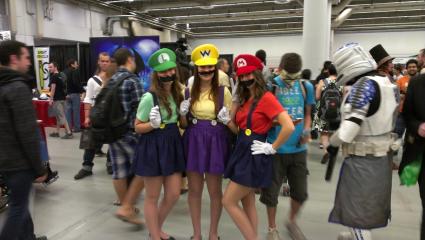
As I visited the Montreal comics convention which took place just last September, I could not help but notice that many of the outrageous(ly creative) costumes on display on the convention floor were proudly flaunted by female participants.

Image & Narrative 9.1

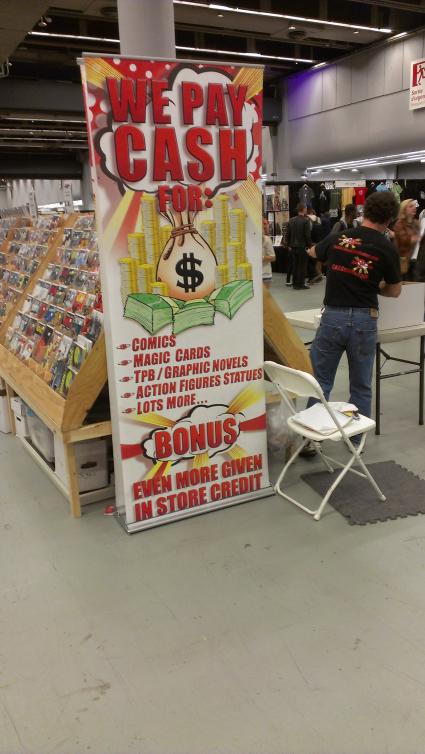
Interestingly, the majority of these costumes paid homage to products of popular culture other than (superhero) comics. There was the obligatory princess Leia costume, there were horror-inspired costumes and many manga-inspired outfits. I saw a great a number of steampunk goggles parading by as their owners rushed to find a good viewing spot at one of the many conferences held by their favourite TV or movie stars. Comic book dealers were trying to convey their interest in our business with all their might.

Image & Narrative 9.2

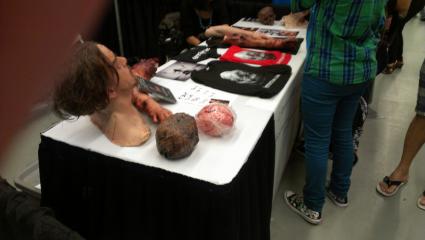
But money seemed to flow towards accessories: leather bracelets to complete a mediaeval look, half-eaten zombie brains for those who favoured the horror genre, cute stuffed animal familiars for kids and adults alike…

Image & Narrative 9.3

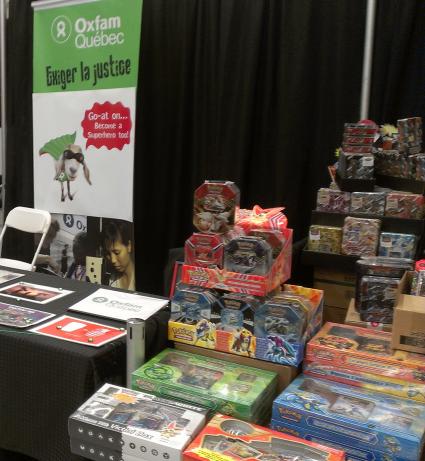
Most of all I was struck by the many spectators that had come to enjoy the show. Unassuming, uncostumed people of all kinds that were looking for interesting sights and whose desires were readily fulfilled by the costumed participants who seemed to know exactly what their role was in all of this. At times stretching the practice of the photo-opportunity far beyond its usual structured and paid limits all the way to voyeurism, this exchange seemed both liberating and perverse. The same ambiguity arguably applies to the presence of Oxfam at the convention.

Image & Narrative 9.4

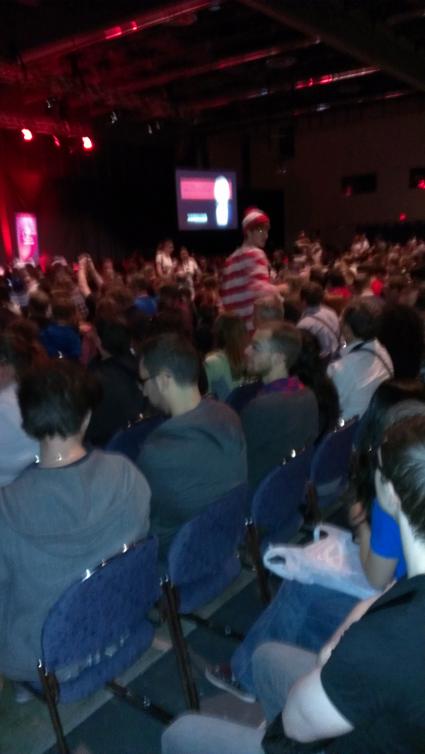
Has the comics convention become a place where our collective worries and concerns share the same relevance as the DC Universe Reboot? Is it ok for us to dress up issues of (social) injustice in a sparkly wig and matching cape? Liberating or denigrating? I experienced a clever culmination of the above trends as a man in a Where’s Waldo? costume waited until everyone was seated in anticipation of the arrival of Sir Patrick Stewart (Star Trek’s Captain Jean-Luc Picard) to stand up and stand out in an ironic rendition of the game associated with his chosen costume. This man was performing. And before I realised it I had snapped a picture of his performance.

Image & Narrative 9.5

None of the trends described above (the increased presence of women and the focus on elements of popular culture that are not comics, which translate into a different (precarious) economic status for the comic book dealers at the event, the increased prevalence of the spectator-performer dynamic and the insertion of issues that concern the public at large into the space of the comics convention) are exclusive to the Montreal Comiccon and I am certainly not the first one to note a change of tone in the goings-on at comics conventions, but it seems to me that my observations at (my snapshots of) the Montreal Comiccon can serve as the basis for an exploration of the evolution which the American comics convention has undergone since its emergence in the 1970s, a photo-opportunity of a different kind. This evolution is characterised by a movement away from the centrality of the act of collecting and the building of a form of community through the sharing of expertise to that of the value question (Can I find that one rare book which will complete my collection? Which comic would be a good investment?) and further towards networked (costumed) performance. I must add that just as it would be inaccurate to claim that the comics convention has always been completely walled off from other elements of popular culture, it would be a stretch to posit that one could not find costumed participants (or women for that matter) at 1970s or 1980s comiccons.[2] But at present we see significantly more of these things, and, more importantly, we see them differently. Indeed, underlying our quantitative observation arguably lies a fundamental change of the participation paradigm, a change of mode. The comics convention is no longer just a celebration of fandom(s). The Hollywood entertainment industry has opened up and expanded the comiccon as a showcase and a publicity venue for popular culture at large, amplifying and preparing the space of the comics convention for the fetish of the spectator’s gaze which is inherent in the focus on performance that is typical of networked costuming. Needless to say that the rise of this practice goes hand in hand with and is sustained by technological evolutions and cybercultural infrastructures that allow easier and cheaper ways of documentation (digital cameras, cell phone cameras) and render the dissemination of said documentation more accessible (social media, internet fora). What I aim to do in the remainder of this short text is to open a speculative avenue of reflection on the topic of the gaze through the lens of one of the most visible changes in the comiccon landscape: the emergence of women on the scene.

Traditionally a very male-dominated culture, the American comic book culture, out of which the comics convention has grown, was notorious for its lack of appeal to and inclusion of women. That is not to say that Woman was entirely absent from the culture, indeed, she might be said to have fulfilled a key role in functioning as a symbol for the exercise in boundary policing that seems to have animated the comic book culture for a long time. While the position of women within comics culture (the representation of women in comic books, the role of women in the industry etc.) is too complex a matter to fully dive into at present, I would like to propose the idea of distance as a unifying characteristic of the interaction between the comic book culture of the 1970s through to (at least) the 1990s and womankind. As a figure of longing women were awarded value on the condition that they remained absent, a pattern that can easily be expanded to include comic book culture’s relationship with legitimate readership and culture more generally. Now that women have physically entered the space of comic book culture by attending comics conventions en masse I would like to explore what has become of the Woman figure. What is her place (function, role) in comics discourse and in the structures underlying comics culture?

As self-professed authentic comics fans bemoan what they consider the impending implosion of the comic book convention – and it is certainly true that changing trends in comics convention practices have made it hard for comic book vendors to turn a profit at conventions these days – it is often apparent that they are ill at ease with the presence of outsiders (women, performers, non-fans) at these events.[3] In a linear, metaphorical reading of events, some might consider this phenomenon the proverbial growing pain of a neurotic adolescent male culture which is maturing into a functioning part of society (culture), but I do not necessarily find that metaphor inspiring, nor its implied teleology accurate. Instead, I would like to offer a short interpretation of the Woman figure in contemporary comics culture, a culture which continues to struggle with boundaries, but this time finds itself wrapped up in a discourse of survival rather than longing. This brief exercise will show how the Woman figure of today can fulfill a role that runs parallel to her function in earlier comics culture, arguably that of the ultimate threat.

What turns Woman into a threat seems to me to be the way in which she can function as a missing link between economy and performance, the essential constituents of the showcase mode which we have identified as underlying the new comics convention trends and which is a cause for concern within comic book culture (as it is suspected of threatening its (financial) survival). However, I would argue that the more fundamental problem that women pose with regard to comics culture today is of a different order: they are subverting the mode in which comics culture has always related to others (and women in particular), that of keeping distance, thereby threatening the very identity of comics culture.

My interpretation, which is admittedly fairly condensed, relies on the reconstruction and deconstruction of an associative structure with regard to women at comics conventions:

Starting out firmly within the context of the convention concept, there are at least two elements that allow the contemporary comics convention to be connected to the notion of the exposition (such as the game industry E3 Expo that is held in LA every year; not all expos are alike of course, but my focus here is on expos that have traditionally attracted a male audience). One element is fairly straightforward: the convention and the expo are held in the same space, the other is more fundamental: the showcase element which characterises contemporary comiccons is shared by the expo. Now that a connection is established between both events we can turn our attention to the women that are present in both environments. With regard to the women present at the comiccon and the expo it is possible to posit a double link as well: on a physical level women at conventions and women at expos often resemble one another, donning costumes, playing off of their sexuality, even striking the same sort of poses (admittedly expo workers have a tendency to instrumentalise their sexuality in a more manifest way than comiccon attendees tend to). They also, however, both work as gaze-chasers, performing a role in order to attract the spectator’s attention. Here we must of course differentiate between the motives and circumstances of female conference participants and promotional expo workers. Promotional workers are engaged to work, they are not participants, the most obvious echo of this situation lies in the way money flows at expos. Women receive money for their work, (male) visitors pay for tickets or are invited. The economic disparity in this situation ensures the activation of the distance concept which we have pinpointed as typical of (but of course not exclusive to) comics culture.

With regard to the female performers at comics conventions, the interpretive structure which I have mapped out has three consequences. Not only does the associative dynamic allow economic motives (generalised as bad motives) to sneak their way into the image comics culture might form of these women, it also finalises a parallel between Hollywood (the cultural mainstream which comics culture also tends to have a tumultuous relationship with) and the Woman figure in that Woman also comes to represent an interlinking of showcase and economy. Last but most definitely not least the whole structure shows how, in contrast with the promotional workers who remain economically separated from the men whose gaze they are trying to catch , the presence of women at comics conventions breaks with the dynamic of distance. In freely giving what in the past the practice of longing revolved around (the connection with this past pattern puts female costumed performers in a position that cannot be taken up by male costumed performers ) , the female costumed convention goers subvert one of the core certainties of comics culture, they fracture the distance which seems to be an integral element of the positioning exercise of comics culture. These women then find themselves at the centre of an evolution that is often considered as bringing about radical change.

Of course this sentiment of change stands in stark contrast with the conservative responses which we have shown it to elicit. We might in fact conclude that on a certain level not much (or at least not everything, as is often implied by anxious comics fans) has changed for American comics culture as the distancing reflex which has informed it for such a long time remains an active (though not unchallenged) reality that is connected intimately with claims of authenticity.

References

Grossman, Lev. “San Diego Comic-Con, Day Zero: Has the Nerd Bubble Burst?” Time.com. July 20th 2011. On line. October 20th 2012. http://techland.time.com/2011/07/20/san-diego-comic-con-day-zero-has-the-nerd-bubble-burst/.

– “The Guy Who Hates Comic-Con Goes to Comic-Con, Part I.” Time.com. July 20th 2010a. On line. October 20th 2012. http://techland.time.com/2010/07/20/the-guy-who-hates-comic-con-goes-to-comic-con-part-i/.

– “The Guy Who Hates Comic-Con: Oh My God Shut Up About Comic-Con.” Time.com. July 26th 2010b. On line. October 20th 2012. http://techland.time.com/2010/07/26/the-guy-who-hates-comic-con-oh-my-god-shut-up-about-comic-con/.

Johnston, Rich. ““Hey! Quasi-Pretty-NOT-Hot-Girl, You Are More Pathetic Than The REAL Nerds” – Tony Harris (UPDATE).” Bleeding Cool. November 13th 2012. On line. January 10th 2012. http://www.bleedingcool.com/2012/11/13/hey-quasi-pretty-not-hot-girl-you-are-more-pathetic-than-the-real-nerds-tony-harris/.

Charlotte Pylyser is a PhD student at the Catholic University of Leuven. She operates from a literary studies and cultural studies background and her research concerns the Flemish graphic novel in particular and issues of culture and context with regard to comics in general.

She sits on the editorial board of Image [&] Narrative.

[1] – An earlier version of this article was published in French on the Délinéaire blog of the NT2 Research Lab for Hypermedia Works (Université du Québec à Montreal). This text can be found here.

[2] – Since their very beginnings comics conventions have welcomed sci-fi and fantasy fandoms into their space. One of the first guests of the San Diego Comic-Con (1970 edition) was in fact Ray Bradbury.

[3] – The series of articles on the 2010 San Diego Comic-con which Lev Grossman has written for the digital edition of Time Magazine forms a pertinent example of this type of discourse. The Time book critic and technology writer starts off his observations by noting that “Comic-Con is spiritually toxic” (Grossman 2010a, his emphasis) and finishes his thoughts by claiming that “Comic-Con is hurting nerd culture, in a broad, systemic and probably permanent way” (Grossman 2010b). Grossman repeats his concerns in his 2011 series of articles on Comic-Con, stressing the fact that he is reporting on “the spectacle of the subculture that kept me alive when I was an alienated 13-year-old being mainstreamed and dumbed-down and sold off for parts [the subculture is sold off for parts, not the 13-year-old boy]” (Grossman 2011). More recently, Tony Harris has sparked a fiery internet debate about women at comics conventions by accusing the majority of the female cosplayers at comiccons of being inauthentic fans whose interest in costumed performance revolves primarily around receiving male attention (Johnston). As is illustrated by some of the quite heavy criticism of his opinions, many of the assumptions made by Harris in his post are not so straightforwardly shared by other comics fans who wonder: “why should we be imposing some kind of ThoughtCrime on cosplayers, when we could just celebrate the fact that aspects from the comics industry [are] spreading through mainstream culture in uncontrollable, unexpected ways – rather than being simply ignored” and question why his accusations are exclusively aimed at women (Johnston).

 
Leave a comment

Posted by on 2013/01/22 in Image [&] Narrative