Scott McCloud’s articulation of the universality of cartoon imagery (‘when you enter the world of the cartoon—you see yourself’ [36]) has come under much scrutiny during the years since Understanding Comics first ushered the medium into the spotlight among academics. I am partial to this growing collection of perspectives that seeks to complicate the idea that comics naturally invite readers into their worlds. Gillian Whitlock, in her reading of Marjane Satrapi’s Persepolis, offers one such complication; ‘there can be no simple universality in the associations produced by cartooning across very different relationships’ (977), she writes. Even a cursory survey of the tools, topics, and stylistic and generic choices that cartoonists have employed in their work reveals that comics do not make us all one in our experiences; instead the form (as with any form) exhibits a proliferation of divergent approaches to life—some that pull us in with their imagery and others that seem determined to alienate. Additionally, universalizing claims tend to neglect the medium’s capacity to help readers “re-see” known events or experiences with new points-of-view. Of course, another problem with universalism is that what we understand as a universal worldview tends to be dictated by those who have the power and voice to control the world’s goings-on.
Yearly Archives: 2013
News Review: August 2013
Americas
United States
Business
Diamond Comic Distributors, Inc., announced their top-selling comics for July 2013. Superman Unchained #2, Batman #22 and Guardians of Galaxy #5 took the top spots. Link (09/08/2013, English, MB & EG)
Diamond Comics also released their best-selling graphic novels for July 2013, with the second volume of Matt Fraction and David Aja’s Hawkeye, alongside Avatar Last Airbender, and Saga in the top spots. Link (09/08/2013, English, MB & EG)
Culture
The Comic Arts Brooklyn Festival (taking place on the 9th November) has confirmed the first of its curated panels, which will feature Paul Auster, Paul Karasik, David Mazzucchelli, and Art Spiegelman speaking about the adaptation of Auster’s City of Glass graphic novel to commemorate its 20th anniversary. Link (29/08/2013, English, EG)
The Columbus College of Art & Design will be hosting their second annual Celebration of Comics between the 27th and 28th September. Bone creator Jeff Smith will be the keynote speaker, and his work from RASL will be on exhibition. Link (English, MB)
Education
The University of Colorado is offering a free seven-week online course entitled “Comic Books and Graphic Novels” starting on the 23rd September. Professor William Kuskin will lead the session that will explore the comic book as literary art. A draft course syllabus has been published. Link (English, MB)
Karen Green was interviewed about her course Comic Books and Graphic Novels as Literature. Link (English, WG)
Obituary
Rick O’Shay creator Stan Lynde passed away on the 6th August, in Helena, Montana, aged 81. Emerging in 1958, the western comic strip gained Lynde a following over the next 20 years of 15 million daily readers. Link 1 (07/08/2013, English, MB), Link 2 (14/08/2013, English, WG)
Research
The Midwest Popular Culture Association / American Culture Association (MPCA/ACA) has announce the launch of a new journal: The Popular Culture Studies Journal. The journal accepts submissions on comics, cartoons, and graphic novels, amongst other things. Link (English, WG)
Narrative Structure in Comics: Making Sense of Fragments by Barbara Postema has been published through RIT Press. Link 1 (25/07/2013, English, WG), Link 2 (English, WG)
The Daniel Clowes Reader: A Critical Edition of Ghost World and Other Stories, With Essays, Interviews, and Annotations has been published through Fantagraphics. Amongst other things, the collection includes a number of essays about Clowes’ work by scholars and critics. Link (English, WG)
Shot in the Face: A Savage Journey to the Heart of Transmetropolitan is an anthology that explores Warren Ellis’ Transmetropolitan series. The collection is edited by Chad Nevett and has been published through SEQUART. Link (English, WG)
The University of Toledo’s Matt Yockey has released a call for papers for a collection focusing on the shaping of Marvel Comics as a transmedia brand. Link (02/08/2013, English, EG)
The Popular Culture Association/American Culture Association has opened up presentation submissions for their 2014 conference in Chicago. Link (05/08/2013, English, EG)
The 42nd Annual Louisville Conference on Literature & Culture has announced a call for papers, with particular emphasis on panels focusing on the intersection of comics and literature. Link (06/08/2013, English, EG)
Asia
China
Culture
Comix Homebase, a centre for Hong Kong comics and animation, finally opened in July. It is run by the Hong Kong Arts Centre, and the first exhibition which was held in August, focused upon Ma Wing Shing. Link (Chinese, LCT)
Japan
Culture
Yonezawa Yoshihiro Memorial Library (Meiji University) is hosting the SciFi and Images of the Future Exhibition, between the 1st and 29th September. Link (Japanese, JBS)
Eshi 100 Part 2 – Contemporary Japanese Illustration in Kyoto Exhibition will be hosted by the Kyoto International Manga Museum from the 28th September to the 1st December. Link (English, JBS)
On the 14th September, the Yonezawa Yoshihiro Memorial Library will be holding a talk event with Tani Koshu, author of Japan Sinks, Part 2. Link (Japanese, JBS)
Education
Kyoto International Manga Museum is hosting four presentations under the title, “Pikadon – Expressions of the atomic bomb in Japanese animation,” on the 30th September. There will also be a screening of Pikadon. Link (Japanese, JBS)
Law & Politics
The Matsue City (Shimane Prefecture) Board of Education rescinded its decision to limit access to the manga series Barefoot Gen. Link (26/08/2013, English, JBS)
Research
The Gender and Sexuality Research Group of the Japanese Society for Studies in Cartoons and Comics (JSSCC) will hold its 28th research meeting on the 22nd September. Link (Japanese, JBS)
Singapore
Culture
The main Chinese newspaper in Singapore, Lianhe Zaobao, celebrated its 90th anniversary by holding a cartoon exhibition at the National Library of Singapore. It was co-organised with the Singapore Memory Project. Link (English and Chinese, LCT)
Europe
Belgium
Culture
FACTS 2013, the biggest comics, sci-fi, and anime festival in the Benelux, will be held on the 19th and 20th October, at Flanders Expo, Ghent. Link (English, JBS)
Croatia
Culture
Croatian illustrator and writer Igor Kordej has been knighted by the French Ministry of Culture for his contributions to art and literature. Kordej is currently working for the French publisher Goncourt. Link (11/08/2013, English, LO)
Germany
Culture
The third Graphic Novel Day is announced as part of internationales literaturfestival berlin (ilb) to take place at Haus der Berliner Festspiele on the 8th September; guests include Atak and Flix. Link (19/08/2013, German, MdlI)
The festival, Comicgarten Leipzig, will take place on the 6th and 7th September; guests include Naomi Fearn and Haggi. Link (27/08/2013, German, MdlI)
Obituaries
Cartoonist Christian Moser (Monster des Alltags) died at the age of 47. Link (15/08/2013, German, MdlI)
Research
A conference on historically based comics, Sketching the Past – Vermittlung von Gewaltgeschichte im Comic, will take place at Europa-Universität Viadrina, Frankfurt (Oder), between the 26th and 28th September. Link (02/08/2013, German, MdlI)
A conference on comic adaptations of literary works, Graphisches Erzählen – Comic-Adaptionen literarischer Texte, will take place at Heinrich Heine University Düsseldorf between the 5th and 7th March 2014. The call for papers deadline is the 31st October 2013. Link (08/08/2013, German, MdlI)
Portugal
Culture
From the 9th August until the 22nd September the city of Viseu is hosting the XVIII Salão Internacional de Banda Desenhada de Viseu. The main subject is Comics Fanzines in Portugal. Link (Portuguese, RR)
Research
The Second International Conference on Illustration & Animation (CONFIA) has extended their call for papers until the 12th September. Comics and Graphic Novels is one of the recommended topics for paper submissions. Link (21/08/2013, English & Portuguese, RR)
The 3CBDPT (3rd Comics Conference in Portugal) will be held in Universidade de Lisboa on the 18th September. Link (Portuguese, RR)
Serbia
Culture
A comic book conference took place in Kragujevac between the 30th August and the 1st September. Key speakers included the Italian illustrators Paolo Bisi and Alessandro Bignamini. Link (28/08/2013, Serbian, LO)
UK
Culture
The Comics Grid‘s blog currently houses a series of reports from Damon Herd, and Hattie Kennedy, on talks by Rutu Modan, Leanne Shapton, Joe Sacco, and Chris Ware, at the Edinburgh Book Festival. Link (English, WG)
The Stripped Book Fest website has a host of videos and reviews from the event. Link (English, WG)
Education
The Guardian have announced the master class How To Write A Graphic Novel. The class takes place on the 7th September, and is run by Paul Gravett, and Pat Mills, amongst others. Link (English, WG)
Research
The symposium, Japanese Body Cultures and The Human Condition (which is inclusive of manga), will take place at Birkbeck College on the 9th September. Link (English, WG)
The Arts and Humanities Research Council (AHRC) have posted a film that details the research currently being undertook by Professor Jane Chapman (et al.) at the University of Lincoln. The project looks to examine the depiction of World War I in comics from 1914-1918. Link (English, WG)
Abstracts are now being accepted for the symposium, The Adventures of Tintin, at University College London on the 10th January 2014. 400 word abstracts are due by the 31st October. Link (12/08/2013, English, WG)
The deadline has been extended for submissions for the collection, Neo-Victorian Villains: Neo-Victorian Fiction, Adaptation and Performance, which will examine the depiction of Victorian villains in comics (amongst other things). 250 word abstracts are due by the 15th September. The old call for papers (without the updated submission date) can be accessed through the link. Link (18/08/2013, English, WG)
The International Bande Dessinée Society website currently houses photographs and reportage from the Joint International Graphic Novel and IBDS Conference which took place in Glasgow and Dundee between the 24th and 28th June. Conference reports are courtesy of Alex Valente, Stephen O’Donnell, and William Grady. Link (English, WG)
* * *
News Editor: Will Grady (comicsforumnews@hotmail.co.uk)
Correspondents: Jessica Bauwens-Sugimoto (JBS, Japan), Michele Brittany (MB, North America), Eric Ganeau (EG, North America), William Grady (WG, UK), Martin de la Iglesia (MdlI, Germany), Luka Ostojic (LO, Croatia), Renatta Rafaela (RR, Portugal), Lim Cheng Tju (LCT, Singapore).
Click here for News Review correspondent biographies.
Suggestions for articles to be included in the News Review can be sent to Will Grady at the email address above.
The dissolution of the pictorial content in Hugo Pratt’s ‘Corto Maltese’ and Lorenzo Mattotti’s ‘Fires’ by Barbara Uhlig
In her article ‘L’héritier des maîtres de l’aquarelle’, Emmanuelle Lequeux (2011) wrote that Hugo Pratt evoked the history of abstract art in his work Corto Maltese. And indeed, from the three-panel-detail she presented alongside her article one might get the impression that Pratt ventured into the abstract in his comics. However, it raises the questions of whether Pratt did stretch the medium’s boundaries to include abstraction into his narration or whether this is only due to the detail she chose and if comic panels can actually be analyzed without taking at least the scene as a whole into account.[1]
Corto Maltese was bursting with innovations when its first story ‘Ballad of the Salt Sea’ appeared in installments in 1967. Firstly, it was astonishing in its clear design and unusual length of 165 pages. The multitude and complexity of its characters, the morally dubious anti-heroes, the landscape that itself became an active character in the narration as well as the extensive research Pratt conducted for his stories were groundbreaking. And without a doubt ‘The Ballad of the Salt Sea’ already shows tendencies to reduce the pictorial content to a minimum, something that went on to be considered typical of Pratt’s work.[2] In an interview conducted in the early 1970s, he stated: ‘Vorrei arrivare a dire tutto con una linea’ (Trevisani 2010) – I want to arrive at telling everything with one line. At that time his style was changing significantly, moving away from his Milton Caniff inspired chiaroscuro and becoming increasingly clean, reduced and daringly simplified in its language.
NNCORE Documentation Now Available
Documentation relating to the 2013 Nordic Network for Comics Research (NNCORE) Conference at the University of Helsinki has today been added to the Affiliated Conferences section of the Scholarly Resources archive on the Comics Forum website. The conference abstracts and program are available now, along with issue 7 of the NNCORE newsletter, which includes extensive discussion of the conference. All resources are free to download. The NNCORE website can be found here. Many thanks to Anne Magnussen and the NNCORE team for making these materials available.
To see the other conferences featured in the Affiliated Conferences archive, click here.
If you are a conference director and you would like to archive your material on the Comics Forum website, email us at comicsforum@hotmail.co.uk for details.
IH
Comics and Performance: From ‘Chalk Talks’ to ‘Carousel’ by Damon Herd
In March 2013 I hosted the inaugural DeeCAP (Dundee Comics/Arts/ Performance) as part of Dundee Comics Expo. Since then two other DeeCAPs have taken place, one in June as part of the International Graphic Novel and International Bande Dessinée Conference in Glasgow and Dundee, and the other as a comics workshop earlier this month, with students at the University of Dundee.
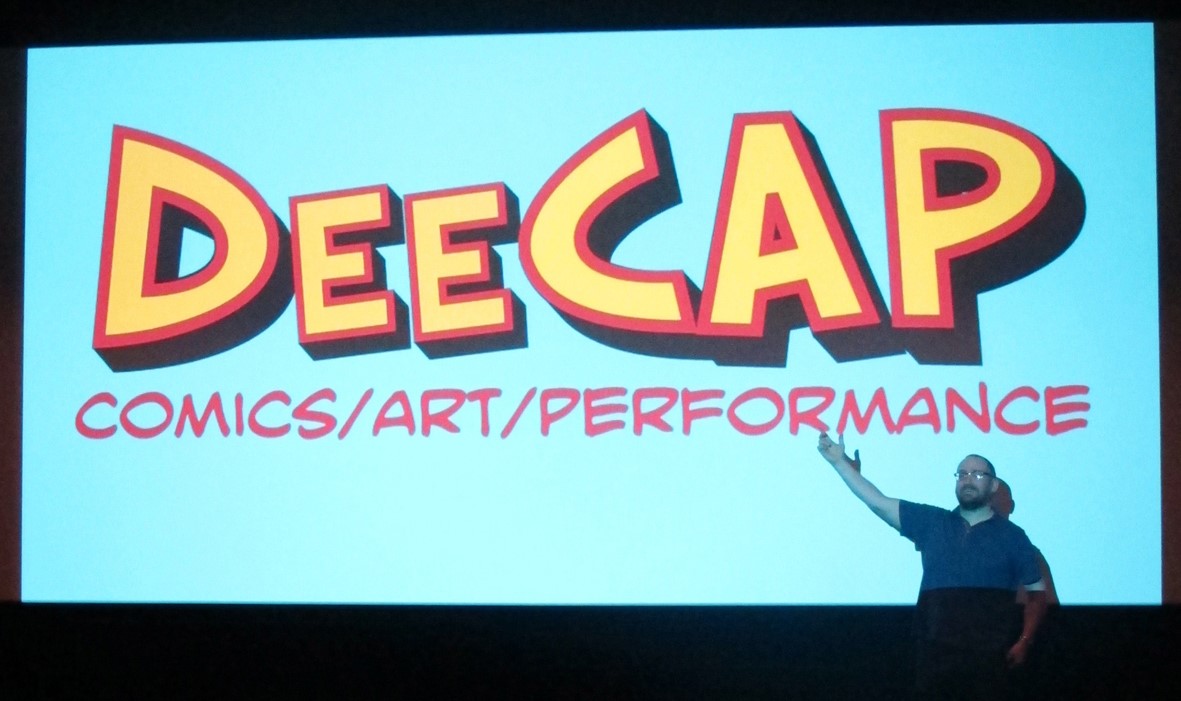
Figure 1 – Damon Herd introduces DeeCAP at Dundee Contemporary Arts 30th March 2013
DeeCAP was initially conceived as a way for an audience to experience comics in a very different environment from the usual solitary reading of strips in books or tablets. At a DeeCAP show visual imagery, which can include comics, art or illustrations are projected onto a screen behind the presenters as they read out and interact with the pictures (See Figure 1).
The first event was hosted in a cinema at Dundee Contemporary Arts and the presenters were David Robertson, Andrew Godfrey and Rossi Gifford and myself. We all performed work that had previously been published in print form. I presented my short strip The Origin of Ticking Boy (2011), complete with a tick-tock soundtrack played through the cinema’s PA system. David read three strips from his anthology Dump (2010) with his excellent deadpan delivery. Rossi Gifford enthusiastically performed her story from Duncan of Jordanstone College of Art and Design’s publication Anthology Three (2013). The strip, about a young woman, Tegan, and her robot protector Galeron was an everyday tale of domesticity, romance, science fiction and horror. Rossi ran around the auditorium, circling the audience to energetically re-enact the events in her story. The last performance of the evening was the most theatrical. Andrew Godfrey recreated an excerpt from his comic The CF Diaries (2012), which chronicles his experiences of living with cystic fibrosis. Partly a homage to Bob Flanagan, made famous in the documentary SICK (1997), Andrew’s performance involved costumes, sound effects, music, and an audience singalong making it a fitting finale to the evening.
Last month at the IGN & IBDS Conference I hosted another DeeCAP at Dundee University for the conference attendees. There were some returning presenters but my main intention this time was to highlight the performative aspects. I played a live soundtrack on electric guitar to accompany my strip There Will Be Distance. A new participant this time was Naomi Bridges, a student on the Comics Studies MLitt at the University of Dundee. Naomi performed an autobiographical strip about her experiences with music and ended her piece by encouraging the whole audience to hum a low drone while she sang a cappella folk songs over the top. It was a very different way to experience the medium of comics.
The third DeeCAP was different; it took the form of a two-hour workshop for visiting students from the USA. With little knowledge beforehand of what they would be asked to do, the students were split into two groups and asked to come up with a short comic based on their experiences of Scotland so far. Impressively, they were up to the task and produced two very interesting autobiographical comics about seemingly mundane incidents. One element that was particularly interesting about the performances was how each group performed the comic as an ensemble, each person acting out and narrating different characters in the story. The group dynamic produced very different presentations than the individual readings at previous DeeCAPs, something to be encouraged at future events.
While DeeCAP was a new event in Dundee it is not a new idea. I was inspired by reading about Robert Sikoryaks’s Carousel performance evenings of ‘Cartoon Slide Shows and Other Projected Pictures’ in New York (See Figure 2). Sikoryak likens his event to a radio show with sound effects and music, which is combined with visual imagery. The co-mingling of words and pictures in comics is further mixed with sound and performance. Sikoryak has been hosting these ‘slide show readings by cartoonists and performers’ since 1997 and there are over 100 performers listed on the Carousel website including Gabrielle Bell, Peter Kuper, Dean Haspiel, Miriam Katin, Sam Henderson and Kate Beaton. Henderson has compared the shows to ‘stand-up comedy without the need to memorize material, or even stand up’ and notes how the opportunity to test material in front of an audience can be helpful in working out nuance and pacing (2012).
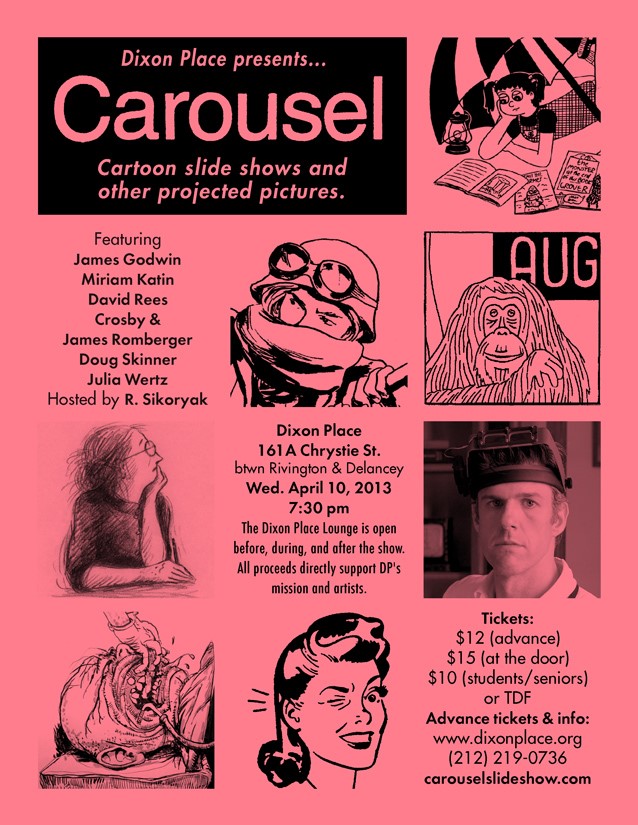
Figure 2 – Flyer advertising a Carousel show on April 10th 2013
The idea of performing alongside images did not originate with Sikoryak either, although he is the most prolific contemporary promoter of the form. In the first decade of the twentieth century Winsor McCay began working in vaudeville to supplement his income as a newspaper cartoonist on strips such as Little Nemo in Slumberland. McCay, and other cartoonists such as Bud Fisher, were working as ‘lightning sketchers’ at ‘Chalk Talks’, a popular Victorian parlour entertainment that had ‘made the transition to the vaudeville stage in the late nineteenth century’ (Canemaker 2005). At Chalk Talks the performer would sketch quickly on a blackboard while telling a story, gradually adjusting the image as the tale progressed (See Figure 3).
Film will load fully before playing. For more on this film, including download options, click here.
McCay would later introduce animated films into his performances, the most famous being Gertie the Dinosaur (1914). McCay interacted with the dinosaur on stage, introducing Gertie to the audience who watched the animation behind him. Gertie left her cave slowly and walked towards them. She munched on a tree, fought with a mammoth and then ate an apple that McCay threw to her. In McCay’s hands the apple was a large cardboard prop that he slipped behind the screen a split-second before it appeared on film flying into Gertie’s mouth. The performance ended with McCay appearing to walk into the screen and climb on Gertie’s back as she walked off screen. By this time McCay’s act had become more of an interaction between performance and animation rather than comics but his comics work and animation continued to influence each other.
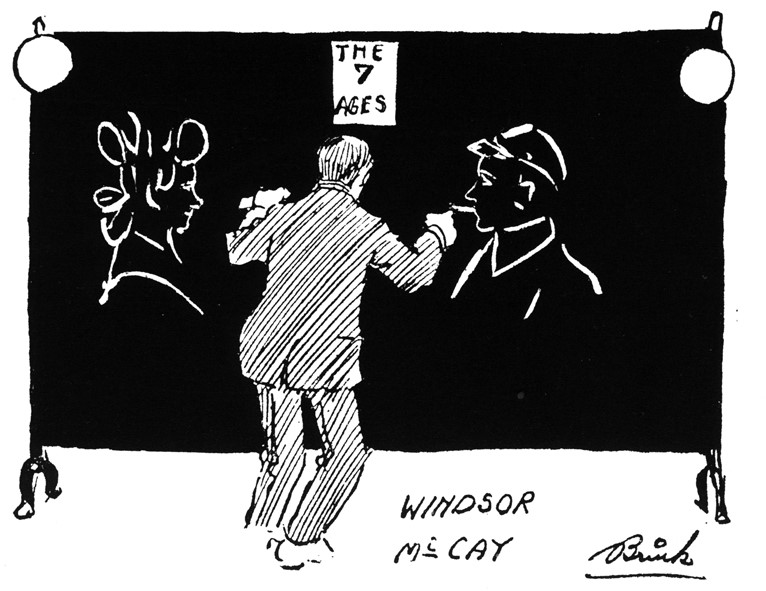
Figure 3 – A Winsor McCay Chalk Talk depicted by the staff artist for the Toledo Blade March 27th 1907
Contemporary comics creators embracing performance have included Alan Moore, who in 1995 staged a spoken word performance called The Birth Caul (A Shamanism of Childhood), which had music by David J and Tim Perkins. This was one of several collaborations between Moore and these musicians, which Moore intended to be ‘one off performances that would be preserved as a CD’ (Moore 2008). Unlike McCay’s performances or those featured in Carousel, The Birth Caul was not intended to have a visual element. The later comic book version by Eddie Campell was, according to Moore, an adaptation or ‘mix’ of the original piece, a reworking of ‘performance art into a more narrative medium’ (2008).
Like McCay and Moore, Ben Katchor, also a contributor to Carousel, initially did not use comics in his performances. In 1995 Katchor produced ‘radio cartoons’ of his strip Juilus Knipl, Real Estate Photographer for NPR. However Katchor has gone on to more fully embrace comics as performance with what he calls ‘Pictographic ballad operas’. Since 2004 he has collaborated with musician Mark Mulcahy on a series of contemporary music-theater productions that harken back to the ballad operas of 18th century England as well as the vaudeville tradition of McCay. The shows mix popular musical forms with visual projections. In these performances Mulcahy sings Katchor’s words as he plays his own music while behind them Katchor’s drawing are projected. Their 2009 commission A Checkroom Romance brings to mind the soundtrack to the Daniel Clowes comic Like a Velvet Glove cast in Iron by Victor Banana (cartoonist Tim Hensley) with its slightly jokey jazz and easy listening inflected tunes. It would be interesting to see Hensley’s soundtrack as a performance alongside Clowes’ images as it adds another creepy layer to the already sinister happenings in the book.
Comics performances have also recently turned up in unexpected areas. At the Narrative Future for Health Care Conference in June 2013 David Small was a keynote speaker. He started his presentation by playing a film of a passage from his autobiographical comic book Stitches (2009). The film played still images from the book along with an audio track of Small reading the text mixed with the music of Morton Feldman. Small talked later about the importance of Feldman’s music to him when making Stitches. Screened in the dark in a large auditorium and on a big screen with a good quality sound system, it was an absorbing and powerful way to experience Small’s work. On a lighter note, Paul Gravett’s keynote speech at the 2013 Graphic Medicine conference can be seen on the Graphic Medicine website. It is worth catching as in the middle of his speech Gravett does a very entertaining read through of the 1950s strip ‘Calling Nurse Abbott!’ from Girl comic, complete with different voices for each character.
There are potentially endless ways for comics to interact with performance. In Bart Beaty’s current research project Comics Off The Page, he is investigating ‘comics artists who are bringing comics into conversation with other art forms like dance, musical performance, painting, sculpture, and architecture’ (2012b). At the Comics & The Multimodal World Conference in Vancouver in June 2013 Beaty used his keynote speech to elaborate on the many ways that artists are stretching the boundaries of comics. Some artists have drawn live on stage alongside a band playing music adapting their drawing to the music. Others, such as Jerome Mulot and Florent Ruppert create site specific comics, and have used the audience as an interactive performance art element in the production of strips.
The act of performance does change the way in which we experience comics, and it also raises the question of whether we can still call them comics. The main difference between watching such a presentation and reading a comic is the loss of control of the narrative for the reader. They also cannot choose not to have sound effects, unless they bring earplugs. In this way, the experience has parallels with reading digital comics that have music or effects in them. At DeeCAP most presenters chose to show their strips one panel at a time, much like the ‘guided view’ in digital comics apps such as Comixology. This allows the audience time to soak up the information in each panel, an effect helped by the vastly increased size of the panels on the cinema screen. Crucially though, this stops the audience seeing other panels at the same time, causing the design of the page to become irrelevant. For the second DeeCAP event I created a new strip specifically to be performed and so considered it from the start as panel by panel rather than page by page. The audience can still influence the experience however. Like Sam Henderson, David Robertson noted on his blog that during the first DeeCAP he was able to ‘linger on any [images] that were getting a good laugh, or had some chicken fat I thought might be picked up by the audience’ (2013).
In his essay ‘Defining Comics?’ (2007) Aaron Meskin argues against essentialist definitions of comics and discusses the way that comics can be defined by ‘typical features’. For example, comics typically have panels but they are not a necessary feature. Meskin then discusses a move away from the comics ‘definitional project’ and suggests that ‘perhaps something is a comic just in case it is/was nonpassingly intended for regard-as-comic’ (2007: 376). This is a move towards defining comics along social rather than functional lines in a similar way to that proposed by Bart Beaty in Comics Versus Art (2012). Building on the theories of Pierre Bourdieu and George Dickie, Beaty proposes that ‘comics can be defined as objects recognized by the comics world as comics’ (2012b: 37). The comics performances presented in DeeCAP or Carousel retain many of Meskin’s ‘typical features’, such as panels or speech balloons so they can still be considered comics by that definition. However, they are also created by and for those in, what Beaty has termed, the ‘comics art world’ and so can also be considered as comics in a cultural sense.
This current wealth of comics and performance events show that the art form of comics continues to mutate and evolve. Choreographer Sidi Larbi Cherkaoui presented his latest work TeZuKa at Sadler’s Wells in London in 2011. A dance production based on the life and work of Osamu Tezuka, this multi-media event used Tezuka’s illustrations projected alongside the work of video artists, calligraphers, musicians and dancers. There are also other simpler forms of comics and performance that hark back to the Chalk Talks of vaudeville. Searching the phrase ‘Draw My Life’ on YouTube brings up a whole host of short videos uploaded by individuals telling the story of their lives while drawing it out on white boards like Victorian ‘lightning sketchers’. They continually edit and erase the drawings as the talk progresses, modern technology bringing an experience from the days of vaudeville into everybody’s home. At this moment there is also a boom in comics performance events, as well as Carousel and DeeCAP there are several other events in Portland, Oregon alone, including The Projects and the Comic Artist Nights at the Portland Opera. Along with comics performances such as Mulot and Ruppert these will hopefully lead to even more exciting and interesting ways to experience the comics medium.
References
Beaty, B. (2012a), Comics versus Art. Toronto: University of Toronto Press.
Beaty, B. (2012b), ‘Comics versus Art: Interview with Bart Beaty’ [online]; http://blog.comicsgrid.com/2012/08/comics-vs-art-interview-bart-beaty/, accessed 1st August 2013.
Canemaker, J. (2005), Winsor McCay: His Life and Art revised and expanded edition. New York: Harry N. Abrams, Inc.
Moore, A. (2008), Alex Fitch interviews Alan Moore [online] http://panelborders.wordpress.com/2008/10/23/panel-borders-from-hell-and-psycho-geography/, accessed Tuesday 23rd July 2013.
Henderson, S. (2012), Comics Aren’t Just For Eyes Anymore [online] http://www.tcj.com/comics-arent-just-for-eyes-anymore/, accessed 23rd July 2013.
Meskin, A. (2007), ‘Defining Comics?’ In The Journal of Aesthetics and Art Criticism (65:4) pp. 369- 379
Robertson, D. (2013), How To Read A Comic Aloud To An Audience [online], http://fredeggcomics.blogspot.co.uk/2013/04/how-to-read-comic-aloud-to-audience.html, accessed 1st August 2013.
Damon Herd is a researcher and artist, currently working towards a PhD in Fine Art at Duncan of Jordanstone College of Art and Design, University of Dundee. His research area is life narratives told in the comics medium, with a particular interest in the games authors play with truth. He has recently presented papers at The International Graphic Novel & International Bande Dessinée Society Conference in Glasgow and Comics & The Multimodal World Conference in Vancouver. He has been published in Studies in Comics, and on The Comics Grid, and is a contributor to the comics blog Graphixia.
[EDITOR’S NOTE: This article was updated on the 26th of August 2013 in response to comments (see below), and to incorporate additional relevant links.]
 Comics Forum