RSS

Author Archives: Comics Forum

New Download: Evil Harvest: Investigating the Comic Book, 1948-1955 by Steven E. Mitchell

Today, Comics Forum is proud to present a new download, available through our Digital Texts section. ‘Evil Harvest: Investigating the Comic Book, 1948-1955’ is an MA thesis submitted to Arkansas State University by Steven E. Mitchell in 1982. During recent discussions on the COMIX-SCHOLARS-L mailing list, the thesis was recommended as an excellent resource on the discussions of links between comics and juvenile delinquency that took place in America in the 1940s and 1950s, and Steven has kindly agreed to allow us to make it available here. To download the thesis in PDF format, simply click the links below (or right click and click ‘Save Target As’), or visit our digital text archive in the Scholarly Resources section to download this and a selection of other text by major scholars. All documents are free.

Front Matter

Chapter 1: Introduction

Chapter 2: “Slaughter of the Innocents”: Origin of the Controversy

Chapter 3: The “Red-Hot Thrill”: The Controversy Revived

Chapter 4: Superman in Disguise: The New York State Investigations

Chapter 5: “The Fifth Horseman”: The Federal Investigations

Chapter 6: “‘Operation Clean-Up'” and After: The Controversy Resolved

Appendices

Bibliography (Part 1)

Bibliography (Part 2)

A huge thank you to Steven for his generosity.

If you are an author and have texts you would like to feature in the Comics Forum Digital Texts archive (and have the required permissions to do so), we would be very happy to hear from you! Please contact us at comicsforum@hotmail.co.uk. Texts may include articles, books, dissertations, essays, fanzines, theses etc. Previously published and unpublished works will be considered. Suggestions for texts you have not authored but believe would be useful are also welcome at the email address above.

IH


Image [&] Narrative #9: The Changing Face of the Comics Convention – Some Reflections about Comics Culture on the Occasion of the Montreal Comiccon by Charlotte Pylyser

In this installment of the Image [&] Narrative series I propose to put the argument I have been developing in my previous posts on hold for a moment to have a look at a related phenomenon that has become an increasingly high-profile part of the study of comics culture: the changing face of the comics convention.[1] I have opted to approach this very interesting but quite sensitive question with a blend of empirical observation and interpretation in the hope of generating useful insights and food for thought rather than providing an exhaustive critique or model – it certainly has proven to be an interesting exercise to think about what we could consider an ongoing controversy (that manifests itself not only amongst fans, but also along a varied fan-scholar continuum) in a speculative manner. The next installment in the series will pick up where my third post left off.

As I visited the Montreal comics convention which took place just last September, I could not help but notice that many of the outrageous(ly creative) costumes on display on the convention floor were proudly flaunted by female participants.

Image & Narrative 9.1

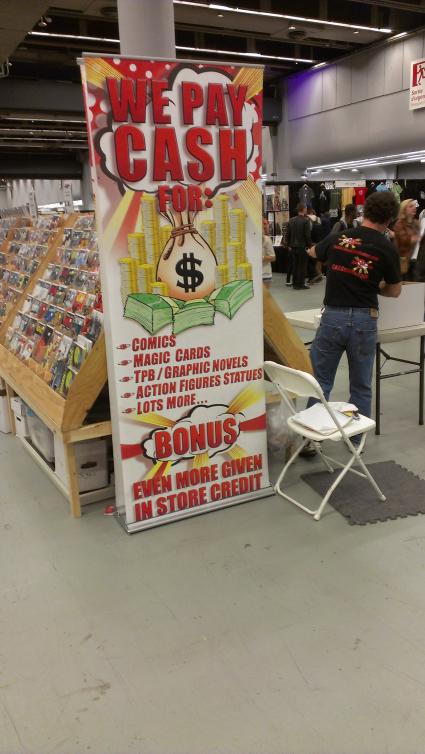
Interestingly, the majority of these costumes paid homage to products of popular culture other than (superhero) comics. There was the obligatory princess Leia costume, there were horror-inspired costumes and many manga-inspired outfits. I saw a great a number of steampunk goggles parading by as their owners rushed to find a good viewing spot at one of the many conferences held by their favourite TV or movie stars. Comic book dealers were trying to convey their interest in our business with all their might.

Image & Narrative 9.2

But money seemed to flow towards accessories: leather bracelets to complete a mediaeval look, half-eaten zombie brains for those who favoured the horror genre, cute stuffed animal familiars for kids and adults alike…

Image & Narrative 9.3

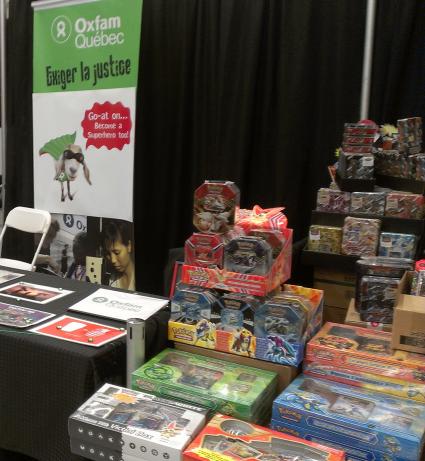
Most of all I was struck by the many spectators that had come to enjoy the show. Unassuming, uncostumed people of all kinds that were looking for interesting sights and whose desires were readily fulfilled by the costumed participants who seemed to know exactly what their role was in all of this. At times stretching the practice of the photo-opportunity far beyond its usual structured and paid limits all the way to voyeurism, this exchange seemed both liberating and perverse. The same ambiguity arguably applies to the presence of Oxfam at the convention.

Image & Narrative 9.4

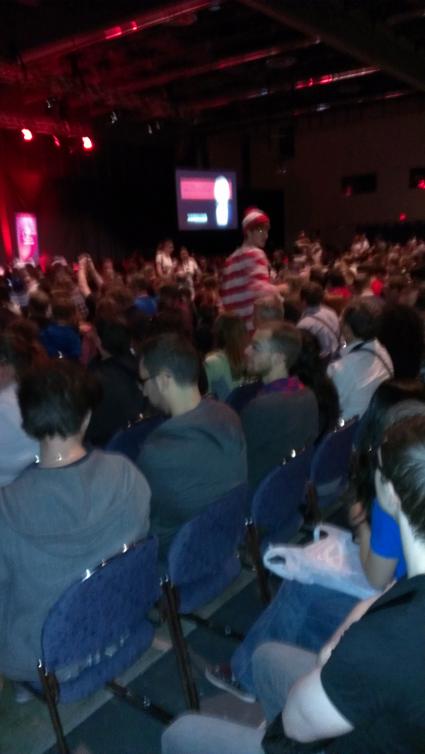
Has the comics convention become a place where our collective worries and concerns share the same relevance as the DC Universe Reboot? Is it ok for us to dress up issues of (social) injustice in a sparkly wig and matching cape? Liberating or denigrating? I experienced a clever culmination of the above trends as a man in a Where’s Waldo? costume waited until everyone was seated in anticipation of the arrival of Sir Patrick Stewart (Star Trek’s Captain Jean-Luc Picard) to stand up and stand out in an ironic rendition of the game associated with his chosen costume. This man was performing. And before I realised it I had snapped a picture of his performance.

Image & Narrative 9.5

None of the trends described above (the increased presence of women and the focus on elements of popular culture that are not comics, which translate into a different (precarious) economic status for the comic book dealers at the event, the increased prevalence of the spectator-performer dynamic and the insertion of issues that concern the public at large into the space of the comics convention) are exclusive to the Montreal Comiccon and I am certainly not the first one to note a change of tone in the goings-on at comics conventions, but it seems to me that my observations at (my snapshots of) the Montreal Comiccon can serve as the basis for an exploration of the evolution which the American comics convention has undergone since its emergence in the 1970s, a photo-opportunity of a different kind. This evolution is characterised by a movement away from the centrality of the act of collecting and the building of a form of community through the sharing of expertise to that of the value question (Can I find that one rare book which will complete my collection? Which comic would be a good investment?) and further towards networked (costumed) performance. I must add that just as it would be inaccurate to claim that the comics convention has always been completely walled off from other elements of popular culture, it would be a stretch to posit that one could not find costumed participants (or women for that matter) at 1970s or 1980s comiccons.[2] But at present we see significantly more of these things, and, more importantly, we see them differently. Indeed, underlying our quantitative observation arguably lies a fundamental change of the participation paradigm, a change of mode. The comics convention is no longer just a celebration of fandom(s). The Hollywood entertainment industry has opened up and expanded the comiccon as a showcase and a publicity venue for popular culture at large, amplifying and preparing the space of the comics convention for the fetish of the spectator’s gaze which is inherent in the focus on performance that is typical of networked costuming. Needless to say that the rise of this practice goes hand in hand with and is sustained by technological evolutions and cybercultural infrastructures that allow easier and cheaper ways of documentation (digital cameras, cell phone cameras) and render the dissemination of said documentation more accessible (social media, internet fora). What I aim to do in the remainder of this short text is to open a speculative avenue of reflection on the topic of the gaze through the lens of one of the most visible changes in the comiccon landscape: the emergence of women on the scene.

Traditionally a very male-dominated culture, the American comic book culture, out of which the comics convention has grown, was notorious for its lack of appeal to and inclusion of women. That is not to say that Woman was entirely absent from the culture, indeed, she might be said to have fulfilled a key role in functioning as a symbol for the exercise in boundary policing that seems to have animated the comic book culture for a long time. While the position of women within comics culture (the representation of women in comic books, the role of women in the industry etc.) is too complex a matter to fully dive into at present, I would like to propose the idea of distance as a unifying characteristic of the interaction between the comic book culture of the 1970s through to (at least) the 1990s and womankind. As a figure of longing women were awarded value on the condition that they remained absent, a pattern that can easily be expanded to include comic book culture’s relationship with legitimate readership and culture more generally. Now that women have physically entered the space of comic book culture by attending comics conventions en masse I would like to explore what has become of the Woman figure. What is her place (function, role) in comics discourse and in the structures underlying comics culture?

As self-professed authentic comics fans bemoan what they consider the impending implosion of the comic book convention – and it is certainly true that changing trends in comics convention practices have made it hard for comic book vendors to turn a profit at conventions these days – it is often apparent that they are ill at ease with the presence of outsiders (women, performers, non-fans) at these events.[3] In a linear, metaphorical reading of events, some might consider this phenomenon the proverbial growing pain of a neurotic adolescent male culture which is maturing into a functioning part of society (culture), but I do not necessarily find that metaphor inspiring, nor its implied teleology accurate. Instead, I would like to offer a short interpretation of the Woman figure in contemporary comics culture, a culture which continues to struggle with boundaries, but this time finds itself wrapped up in a discourse of survival rather than longing. This brief exercise will show how the Woman figure of today can fulfill a role that runs parallel to her function in earlier comics culture, arguably that of the ultimate threat.

What turns Woman into a threat seems to me to be the way in which she can function as a missing link between economy and performance, the essential constituents of the showcase mode which we have identified as underlying the new comics convention trends and which is a cause for concern within comic book culture (as it is suspected of threatening its (financial) survival). However, I would argue that the more fundamental problem that women pose with regard to comics culture today is of a different order: they are subverting the mode in which comics culture has always related to others (and women in particular), that of keeping distance, thereby threatening the very identity of comics culture.

My interpretation, which is admittedly fairly condensed, relies on the reconstruction and deconstruction of an associative structure with regard to women at comics conventions:

Starting out firmly within the context of the convention concept, there are at least two elements that allow the contemporary comics convention to be connected to the notion of the exposition (such as the game industry E3 Expo that is held in LA every year; not all expos are alike of course, but my focus here is on expos that have traditionally attracted a male audience). One element is fairly straightforward: the convention and the expo are held in the same space, the other is more fundamental: the showcase element which characterises contemporary comiccons is shared by the expo. Now that a connection is established between both events we can turn our attention to the women that are present in both environments. With regard to the women present at the comiccon and the expo it is possible to posit a double link as well: on a physical level women at conventions and women at expos often resemble one another, donning costumes, playing off of their sexuality, even striking the same sort of poses (admittedly expo workers have a tendency to instrumentalise their sexuality in a more manifest way than comiccon attendees tend to). They also, however, both work as gaze-chasers, performing a role in order to attract the spectator’s attention. Here we must of course differentiate between the motives and circumstances of female conference participants and promotional expo workers. Promotional workers are engaged to work, they are not participants, the most obvious echo of this situation lies in the way money flows at expos. Women receive money for their work, (male) visitors pay for tickets or are invited. The economic disparity in this situation ensures the activation of the distance concept which we have pinpointed as typical of (but of course not exclusive to) comics culture.

With regard to the female performers at comics conventions, the interpretive structure which I have mapped out has three consequences. Not only does the associative dynamic allow economic motives (generalised as bad motives) to sneak their way into the image comics culture might form of these women, it also finalises a parallel between Hollywood (the cultural mainstream which comics culture also tends to have a tumultuous relationship with) and the Woman figure in that Woman also comes to represent an interlinking of showcase and economy. Last but most definitely not least the whole structure shows how, in contrast with the promotional workers who remain economically separated from the men whose gaze they are trying to catch , the presence of women at comics conventions breaks with the dynamic of distance. In freely giving what in the past the practice of longing revolved around (the connection with this past pattern puts female costumed performers in a position that cannot be taken up by male costumed performers ) , the female costumed convention goers subvert one of the core certainties of comics culture, they fracture the distance which seems to be an integral element of the positioning exercise of comics culture. These women then find themselves at the centre of an evolution that is often considered as bringing about radical change.

Of course this sentiment of change stands in stark contrast with the conservative responses which we have shown it to elicit. We might in fact conclude that on a certain level not much (or at least not everything, as is often implied by anxious comics fans) has changed for American comics culture as the distancing reflex which has informed it for such a long time remains an active (though not unchallenged) reality that is connected intimately with claims of authenticity.

References

Grossman, Lev. “San Diego Comic-Con, Day Zero: Has the Nerd Bubble Burst?” Time.com. July 20th 2011. On line. October 20th 2012. http://techland.time.com/2011/07/20/san-diego-comic-con-day-zero-has-the-nerd-bubble-burst/.

– “The Guy Who Hates Comic-Con Goes to Comic-Con, Part I.” Time.com. July 20th 2010a. On line. October 20th 2012. http://techland.time.com/2010/07/20/the-guy-who-hates-comic-con-goes-to-comic-con-part-i/.

– “The Guy Who Hates Comic-Con: Oh My God Shut Up About Comic-Con.” Time.com. July 26th 2010b. On line. October 20th 2012. http://techland.time.com/2010/07/26/the-guy-who-hates-comic-con-oh-my-god-shut-up-about-comic-con/.

Johnston, Rich. ““Hey! Quasi-Pretty-NOT-Hot-Girl, You Are More Pathetic Than The REAL Nerds” – Tony Harris (UPDATE).” Bleeding Cool. November 13th 2012. On line. January 10th 2012. http://www.bleedingcool.com/2012/11/13/hey-quasi-pretty-not-hot-girl-you-are-more-pathetic-than-the-real-nerds-tony-harris/.

Charlotte Pylyser is a PhD student at the Catholic University of Leuven. She operates from a literary studies and cultural studies background and her research concerns the Flemish graphic novel in particular and issues of culture and context with regard to comics in general.

She sits on the editorial board of Image [&] Narrative.

[1] – An earlier version of this article was published in French on the Délinéaire blog of the NT2 Research Lab for Hypermedia Works (Université du Québec à Montreal). This text can be found here.

[2] – Since their very beginnings comics conventions have welcomed sci-fi and fantasy fandoms into their space. One of the first guests of the San Diego Comic-Con (1970 edition) was in fact Ray Bradbury.

[3] – The series of articles on the 2010 San Diego Comic-con which Lev Grossman has written for the digital edition of Time Magazine forms a pertinent example of this type of discourse. The Time book critic and technology writer starts off his observations by noting that “Comic-Con is spiritually toxic” (Grossman 2010a, his emphasis) and finishes his thoughts by claiming that “Comic-Con is hurting nerd culture, in a broad, systemic and probably permanent way” (Grossman 2010b). Grossman repeats his concerns in his 2011 series of articles on Comic-Con, stressing the fact that he is reporting on “the spectacle of the subculture that kept me alive when I was an alienated 13-year-old being mainstreamed and dumbed-down and sold off for parts [the subculture is sold off for parts, not the 13-year-old boy]” (Grossman 2011). More recently, Tony Harris has sparked a fiery internet debate about women at comics conventions by accusing the majority of the female cosplayers at comiccons of being inauthentic fans whose interest in costumed performance revolves primarily around receiving male attention (Johnston). As is illustrated by some of the quite heavy criticism of his opinions, many of the assumptions made by Harris in his post are not so straightforwardly shared by other comics fans who wonder: “why should we be imposing some kind of ThoughtCrime on cosplayers, when we could just celebrate the fact that aspects from the comics industry [are] spreading through mainstream culture in uncontrollable, unexpected ways – rather than being simply ignored” and question why his accusations are exclusively aimed at women (Johnston).

 
Leave a comment

Posted by on 2013/01/22 in Image [&] Narrative


Captain America and the Body Politic by Jason Dittmer

I have a confession to make. When I sent the manuscript for Captain America and the Nationalist Superhero (Dittmer 2013) to its publisher, I fell off the wagon. After reading superhero comics for the better part of a decade, documenting the adventures of flag-draped superheroes in the United States, Canada, and United Kingdom from 1940 to the present, I quit. I’m not someone who believes that a big wall separates the superhero comics from the rest of the comics world, but after over a thousand superhero comics I was definitely ready to switch things up a bit. So I dabbled in all the great new stuff that I had missed when my reading time was occupied by my book project – some of which were discovered by reading this very website (Fransman 2012) and are highly relevant to this essay. And all the while my monthly delivery of Captain America arrived like clockwork, joining its predecessors on my office desk. Last week, I was finally shamed by the verticality of the stack (almost a year and a half’s worth!) into taking them home and giving them some attention. The comics included the end of Ed Brubaker’s eight year run on the title (a pretty remarkable achievement nowadays), during which he famously brought Bucky back from the dead and walked Captain America through the Civil War crossover that made headlines around the world (e.g., Gustines 2007). One might expect a triumphant victory lap for Brubaker’s swansong on the title. Nevertheless, the end of Brubaker’s run seemed fixated on decline and the limits to power. In this essay I hope to briefly trace the ‘Powerless’ storyline (Brubaker and Davis 2012a, 2012b, 2012c, 2012,d, 2012e), as well as the events leading up to and following from that storyline, before contextualizing it all with a tiny, painless dose of political theory. I will then argue that the trope of ‘Powerless’ (in which, not surprisingly, Captain America’s body loses its superpowers) is a relatively common one over the history of the character. While this is to a certain extent true of many superheroes, in the context of Captain America the plot device is freighted with the baggage of the nationalist superhero genre.

Read the rest of this entry »

 
Leave a comment

Posted by on 2013/01/18 in Guest Writers


Tags: , , , , , ,

Comics Forum Articles Nominated for 2012 Hooded Utilitarian Awards

Five articles from the Comics Forum website have been nominated for Hooded Utilitarian’s Best Online Comics Criticism 2012 award. The nominated pieces are:

Third Quarter Nominations:

A Note on the Woman who Gave Birth to Rabbits One Hundred Years Before Töpffer by Laurence Grove

Alan Moore’s Lost Treasures: ‘The Hasty Smear of My Smile…’ by Marc Sobel

Image [&] Narrative #5: Graphic Poetry: An (im)possible form? by Steven Surdiacourt

Fourth Quarter Nominations:

A fragmentary past: Karasik and Mazzucchelli’s City of Glass by Nicolas Labarre

Visual authentication strategies in autobiographical comics by Elisabeth El Refaie

Congratulations to all our writers for being nominated, and many thanks to the team at Hooded Utilitarian for the mentions!

IH

 
1 Comment

Posted by on 2013/01/07 in News


News Review: December 2012

Americas

Brazil

Research

Revista Universitária do Audiovisual (RUA) released a collection of articles devoted to comics and animation, on subjects ranging from page as symbolic space, comics canon and autobiography. Link (16/12/2012, Portuguese, GS)

United States 

Business

The Beat reports that longtime editor Karen Berger has stepped down from DC’s Vertigo imprint. Link (03/12/2012, English, HMS)

Joey Esposito of IGN announces that Batgirl writer Gail Simone has been fired from her post on the series. Link (09/12/2012, English, HMS)

The Beat confirms that Batgirl writer Gail Simone has been rehired to write Batgirl after public outcry and pressure on DC to keep Simone on the title. Link (21/12/2012, English, HMS)

Calvin Reid of Publishers Weekly announces that Karen Berger’s successor at Vertigo has been named as Shelley Bond. Link (19/12/2012, English, HMS)

Diamond Comic Distributors, Inc. presents sales figures on the top 100 comics for November 2012. Link (English, HMS)

Diamond Comic Distributors, Inc. presents sales figures on the top 100 graphic novels for November 2012. Link (English, HMS)

The Beat reports on Robert Kirkman’s (The Walking Dead) assertion that digital comics media has not cannibalised print comic sales. Link (19/12/2012, English, HMS)

The Beat reports that Devil’s Due Entertainment, after a period of financial instability and the loss of its top titles, is back in business with new publications and goal. Link (19/12/2012, English, HMS)

The Beat reports on the Eisner Award judges named for 2013. Link (12/12/2012, English, HMS)

Culture

Wizard World announces the addition of Comic Cons in St. Louis from the 22nd-14th March, and Nashville from the 18th-20th October, to its 2013 schedule. Link (English, HMS)

Matthew Katz of DNAinfo.com in New York reports that a special one-day exhibit will celebrate the 75th anniversary of Superman on the 27th January  2013 at the Center for Jewish History in New York. The exhibit will include a panel hosted by Larry Tye, author of  Superman: The High-Flying History of America’s Most Enduring HeroLink (21/12/2012, English, HMS)

Law and Politics

Betsy Gomez of the Comic Book Legal Defense Fund announces the CBLDF’s new  advisory board for 2013, including Dennis Kitchen and Neil Gaimain. Link (11/12/2012, English, HMS)

Research

Michigan State University announces its 2013 Comics Forum to be held from the 1st-2nd March 2013 and issues a call for abstracts for individual presentations as well as panels and roundtable discussions. 250 word abstracts in PDF format should be submitted by the 31st January 2013, to Ben Chabala at michstatecomicsforum@gmail.com. Link (English, HMS)

Tom Spurgeon of The Comics Reporter interviews critic Marc Sobel about his upcoming books from Fantagraphics, The Love and Rockets Companion and The Love and Rockets Reader, as well as the work of the Hernandez Brothers. Link (26/12/2012, English, HMS)

Technology

The Beat reports on the launch of Symbolia, a tablet app for graphic non-fiction journalism, edited by Erin Polgreen. Link (03/12/2012, English, HMS)

Asia

Japan

Obituaries

The Beat reflects on the death of Barefoot Gen‘s Keiji Nakazawa on the 19th December 2012, and his impact on comics. Link (26/12/2012, English, HMS)

Research

The evolution of BL aesthetics in BL (Boys’ Love) Manga, a talk by Dr. Nishihara Mari and .Dr. Nagata Natsuki, will take place on the 19th January 2013. You can follow this talk on this Ustream channel link: http://www.ustream.tv/channel/sunnyfunny99. Link (06/01/2013, Japanese, JBS)

Malaysia

Culture

The 11th edition of Comic Fiesta, touted the largest ACG (Animation Comics Games) gathering in Malaysia, was held at the Kuala Lumpur Convention Centre on the 22nd and 23rd December. Link (English, LCT)

The Philippines

Research

The Fine Arts Programme of the Ateneo de Manila University organised Panel by Panel: A Dialogue on Comics in Southeast Asia on the 10th December. Speakers included Lim Cheng Tju (Liquid City 2), Otto Fong (Sir Fong’s Adventures in Science), Mark Tores (Teenage Mutant Ninja Turtles) and Carlo Vergara (Zsazsa Zaturnnah). Link (English, LCT)

Europe 

Austria

Culture

Comics convention Vienna Comix (formerly “Comicbörse”) is held with guest Joscha Sauer. Link (02/12/2012, German, MdlI)

Belgium

Culture/Law

A Brussels court has refused to remove Tintin in the Congo from sale after ruling that the album is not racist under Belgian law. Link (05/12/12, French, LTa)

Croatia

Business

The Ministry of Culture has announced a list of state literary grant winners. The grant (from 21000 to 42000 kunas, which is around 2800 to 5600 euros) has been awarded to 53 literary projects that should be made in 2013, including one comic book project. Alem Ćurin will thus receive 2800 euros to create his comic book Whether You Sail Or Not (original title: Vesl`o ti ne vesl`o). Link (20/12/2012, Croatian, LO)

Culture

The Croatian comic book collective Komikaze will be presented at the Angoulême International Comics Festival that will take place from 31st January to 3rd February in France. Link (26/11/2012, French, LO).

Denmark

Research

The Nordic Network for Comics Research has its 5th newletter out describing the network’s activities. Link (03/12/2012, English, RPC)

Finland

Research

Finland gets another PhD in comics as Mervi Miettinen successfully defended her thesis. Link (15/12/2012, Finnish, RPC)

France

Business

Satirical publication Charlie Hebdo must pay 40000 euros in damages, and print an apology, to cartoonist Siné for unfair dismissal. Link (09/12/2012, French, LTa)

December’s large bande dessinée auction at the Maison Millon raised 1.2 million euros. Link 1 (14/12/2012, French, LTa), Link 2 (11/12/2012, French, LTa)

Cultura replaces FNAC as the sponsor of the Angoulême bande dessinée festival. Link (03/12/2012, French, LTa)

The ACBD (association des critiques et journalistes de bande dessinée) has published its yearly report, the “Rapport Ratier” on the state of the comics market in France, including bandes dessinées, but also comics and manga. The report indicates that while the number of titles is still growing, the number of top-sellers – 50,000 copies and above – appear to be eroding. The market is still dominated by four massive publishers, amounting to nearly half of the production in the sector. Link (27/12/2012, French, NL)

Culture

Before the Angoulême festival, the Critique/ACBD grand prize has been awarded to Alan Guibert for L’enfance d’Alan. The book is a follow up to La guerre d’Alan/Alan’s war, the three impressive volumes Guibert had written and drawn about the life of his American friend Alan Ingram Cope during the Second World War. Link (09/12/2012, French, NL)

Quino, creator of Mafalda, has been made an Officer of the Order of Arts and Letters by the France’s culture ministry. Link 1 (01/12/2012, French, LTa), Link 2 (01/12/2012, French, LTa)

Jacques Tardi has turned down an official distinction from the French government, “la légion d’honneur”. Tardi was apparently not aware that his name had been included in this year’s list – ministries establish a list of deserving citizens – and he willfully turned down the honor, mentioning his desire to remain free from any political influence. Such a refusal is not without precedent, and was indeed a badge of honor for some of the influential writers and intellectuals of the 20th century, who similarly refused to be coopted by the institution. Link (02/01/2013, English, NL)

Law

Charlie-Hebdo has been the focus of much controversy, publishing a special issue on “The life of Mohammed” on the 2nd January 2013, which is described as a historically informed approach to the subject albeit with a humorous graphical treatment. The media coverage mostly chose to emphasise the free speech angle, while relying on the authors’ statements regarding their intents. Link (02/01/2013, French, NL)

Two Muslim organisations are suing Charlie Hebdo for provocation and incitement to racial hatred, after the magazine published cartoons of Mohammed in September 2012. Link (07/12/2012, French, LTa)

Research

Noted comics theorist Thierry Groensteen has conducted a series of interviews with prolific author Joann Sfar. Entretiens avec Joann Sfar. Groensteen explains in his introduction that the book brings together the many autobiographical and artistic clues heretofore scattered in Sfar’s comics and graphic diaries. The book is to be published on the 4th January. Link (10/12/2012, French, NL)

Germany

Business

After a hiatus of 16 years, venerable adult comics magazine U-Comix will be published again from May 2013. Link (***Adult Content. 13/12/2012, German, MdlI)

Culture

Comicfestival München 2013 is announced to take place from the 29th May to the 2nd June. Link (16/12/2012, German, MdlI)

Research

The yearbook Deutsche Comicforschung 2013 is published (ed. Eckart Sackmann). Link (01/12/2012, German, MdlI)

Andreas Veits and Jonas Engelmann have been awarded the Roland Faelske-Preis for research in comics and animation. Link (13/12/2012, German, MdlI)

Ireland

Culture

Bryan Coyle’s and Lee Robson’s Babble graphic novel has once more been delayed. Link (English, SC)

Sweden

Culture

Comics artist Joanna Helgren receives the newpaper Expressen’s youth culture prize. Link (17/12/2012, Swedish, RPC)

Research

The Swedish Foundation Riksbankens Jubileumsfond awards comics scholar Michael Scholtz funding for the project “Entertainment or Propaganda. Comic Strips in Sweden during World War II” (1.251.000 Skr/£167.685)Link (English, RPC)

UK                 

Culture

Comicbookmovie.com have announced that Mark Millar’s Kapow! Comic Convention won’t return to London until 2014. Link (21/12/2012, English, WG)

On the 31st December, BBC1 Scotland aired a documentary, “Just Dandy”, looking at The Dandy comic book. Link (English, WG)

Downthetubes offers a photo review of 75 Years of the Dandy at the University of Dundee, running until the 12th January, 2013. Link (09/12/2012, English, WG).

Obituary

The Guardian has posted an obituary for Gerry Anderson (Thunderbirds, et al.) who died on the 26th December. Many of his creations were adapted into comic books. Link (26/12/2012, English, WG).

Research

The calls for presentations of the second global conference on The Graphic Novel has been posted online. 300 word abstracts are expected on the 22nd March, and the conference will take place at Mansfield College, Oxford, between the 23rd & 25th September, 2013. Link (English, WG)

Oceania

Australia

Research

The conference, “Women’s Manga in Asia: Glocalizing Different Cultures and Identities”, will take place from the 23rd-25th January, in the Department of Japanese Studies, at the University of Sydney. Link (English, JBS)

*                    *                    *

News Editor: Will Grady (comicsforumnews@hotmail.co.uk)

Correspondents: Rikke Platz Cortsen (RPC, Scandinavia), Shelley Culbertson (SC, Ireland), William Grady (WG, UK), Martin de la Iglesia (Austria & Germany, MdlI), Nicolas Labarre (NL, France), Hannah Means-Shannon (HMS, North America & Japan), Luka Ostojic (LO, Croatia), Greice Schneider (GS, Brazil), Lise Tannahill (LTa, France & Belgium), Lim Cheng Tju (LCT, Malaysia & The Philippines).

Click here for News Review correspondent biographies.

Suggestions for articles to be included in the News Review can be sent to Will Grady at the email address above.

 
Leave a comment

Posted by on 2013/01/04 in News Review