RSS

Author Archives: Comics Forum

News Review: February 2015

Americas

United States

Culture

The New-York Historical Society has awarded its annual American History Book Prize to Jill Lepore’s  The Secret History of Wonder WomanLink (17/02/2015, English, WG)

The Billy Ireland Cartoon Library & Museum will celebrate women’s history month and their international holdings with the opening of World of Shojo Manga! Mirrors of Girls’ Desires. The exhibition takes place between the 28th March and the 5th July. Link (English, WG)

Research

The MLA Discussion Group on Comics and Graphic Narratives has published a call for papers for three panels at next year’s MLA Convention in Austin, Texas (7th to the 10th January 2016). The panels are Satire and the Editorial Cartoon, Latina/o Comics, and Charlie Hebdo and its Publics. Link (14/02/2015, English, WG)

Scholars Kathryn La Barre, Carol Tilley, and John Walsh are collaborating on a digital archive analysing comics readership from 1961-1973. Link (03/02/2015, English, WG)

Asia

Japan

Culture

Yonezawa Yoshihiro Memorial Library is showing the exhibition “Mihara Jun, Revival Festival” between the 8th February and the 31st May. Link (Japanese, JBS)

Education

The works of students graduating from Kyoto Seika University’s Faculty of Manga and Graduate School of Manga will be exhibited at the Kyoto International Manga Museum during Anime Week (18th to the 22nd February). During this period, access to the museum is free. Link (Japanese, JBS)

Europe

Austria

Culture

Nextcomic Festival is going to take place in Linz from the 19th until the 27th March; guests include Anke Feuchtenberger and Nicolas Mahler. Link (19/02/2015, German, MdlI)

Belgium

Obituary

Belgian artist Géri, known for his work on Tintin magazine, has died aged 80. Link 1 (05/02/2015, French, LTa), Link 2 (05/02/2015, French, LTa)

France

Culture

Joann Sfar, creator of The Rabbi’s Cat, has began publishing columns and illustrations in the French edition of the Huffington Post. Link 1 (05/02/2015, French, LTa), Link 2 (05/02/2015, French, LTa)

Obituary

Jacques Kamb, cartoonist for the newspaper L’Humanité and bande dessinée artist for Pif Gadget, has died at 81. Link (06/02/2015, French, LTa)

Germany

Culture

Scott McCloud is going to present his latest comic, The Sculptor, in Berlin and Leipzig from the 11th-13th March. Link (05/02/2015, German, MdlI)

Guests at Leipzig Book Fair and the simultaneous comic festival, The Millionaires Club, from the 12th until the 15th March, include Achdé, Judith Park, and Sascha Hommer. Link (12/02/2015, German, MdlI)

Comicfestival München is going to take place from the 4th until the 7th June 2015. Guest country is the UK; guest artists include Frank Quitely, Don Rosa, and Bryan Talbot. Link (19/02/2015, German, MdlI)

An exhibition on Atze and Mosaik is shown in Leipzig from the 24th February until the 18th March. Link (23/02/2015, German, MdlI)

Brigitte Helbling and Sarah Burrini are going to talk about contemporary comics and their production in Stuttgart on the 14th April. Link (26/02/2015, German, MdlI)

Research

There is a Call for Papers for the second issue of Closure. Kieler e-Journal für Comicforschung; the deadline is the 11th March. Link (08/02/2015, German, MdlI)

Greece

Culture

The Athens Comics Library, the first comics library in Athens Greece, is now open. Link (15/02/2015, Greek, LTs)

Hungary

Culture

The Hungarian comic artist and designer Zorro the Bianco’s exhibition, Are You In Our Story?, was opened as part of the LGBT History Month on the 18th February at Roham Bár, Budapest. Zorro’s work was featured in the 2014 campaign film of the LGBT History Month. Link 1 (Hungarian, ES), Link 2 (Hungarian, ES)

Netherlands

Research

The inaugural Amsterdam Comics international conference, Comics Interaction, will take place between the 1st and 3rd July in Amsterdam. Abstracts are due by the 17th April. Link (English, WG)

Portugal

Culture

On the 19th February the Latvian magazine S! published an issue inspired by the book Livro do Desassossego by Fernando Pessoa. The issue includes some comic works from 17 portuguese authors and an introduction by Marcos Farrajota. Link (26/02/2015, English, RR)

Spain

Culture

The winners of the 2015 prizes of the AACE (Asociación de autores de comic de España -Spanish Comics Authors Association) have been announced. Link (11/02/2015, Spanish, EdRC)

The third edition of KBOOM!, an event about comics and self-publishing, will take place in Espai Jove La Fontana (Barcelona) on the 14th and 15th March. Link (24/02/2015, Spanish, EdRC)

The IVAM (Institut Valencià d’Art Modern -The Valencian Institute of Modern Art) is hosting an exhibition by Francesc Ruiz about Valencian comics, from the 19th February until the 30th August. The Universitat Politécnica de Valéncia will also celebrate a seminar parallel to the exhibition from the 4th to the 6th March. Link (22/02/2015, Spanish, EdRC)

A crowfunding project is looking for contributions to produce a documentary about the comics industry in Spain. Link (20/02/2015, Spanish, EdRC)

Sweden

Research

There is a call for papers for a conference regarding the Future in Comics. The event will take place in Stockholm between the 3rd and 5th September, and abstracts are due by the 15th April. Link (English, WG)

*                    *                    *

  News Editor: Will Grady (comicsforumnews@hotmail.co.uk)

Correspondents: Jessica Bauwens-Sugimoto (JBS, Japan),  Enrique del Rey Cabero (EdRC, Spain), Martin de la Iglesia (MdlI, Austria & Germany), Renatta Rafaella (RR, Portugal), Eszter Szép (ES, Hungary), Lise Tannahill (LTa, Belgium & France), Lida Tsene (LTs, Greece).

Click here for News Review correspondent biographies.

Click here to see the News Review archive.

Suggestions for articles to be included in the News Review can be sent to Will Grady at the email address above.


Leave a comment

Posted by on 2015/03/04 in News Review


News Review: January 2015

Americas

Canada

Research

Twelve-Cent Archie, by Bart Beaty, has now been published through Rutgers University Press. Link (English, WG)

United States

Business

DC and Marvel top the charts for the Top 100 Comics for the month of December based on total unit sales invoiced for the month. Batman #37 finished first for DC, and was followed by Amazing Spider-Man #11 and Shield #1 in second and third respectively. Link (English, MB)

Image’s Saga Volume 4 hit number 1 for the Top 100 Graphic Novels for December, with Marvels’ Captain America Peggy Carter Agent of Shield #1 in second, and Just the Tips from Image taking the third spot. Link (English, MB)

Diamond Comics reported the Top 100 Comics for 2014 and Marvel almost completely shut out the top ten slots. The top three spots went to Amazing Spider-Man #1 (Marvel), Walking Dead #132 (Image), and Rocket Raccoon #1 (Marvel). Link (English, MB)

All four volumes of Saga placed in the top ten slots for the Top 100 Graphic Novels for 2014. Saga Volume 3 (Image), Saga Volume 1 (Image), and Walking Dead Volume 20: All Out War Part 1 (Image) took first through third respectively. Link (English, MB)

Diamond Comics provided a year-end reporting of unit and dollar shares and top comic book publishers by retail market and unit market share. Link (English, MB)

Research

Central Michigan University’s Third Annual ComiConference will be  held on the 3rd March. Link (English, WG)

The Journal of Comics and Culture, a new peer-reviewed academic journal to be published by Pace University Press, has announced its first call for papers. Abstracts of 500 words are due by the 15th February. Link (06/01/2015, English, WG)

The new issue of the International Journal of Comic Art (vol.16, no.2) is now shipping. Link (05/01/2015, English, WG)

The Comics Arts Conference is now accepting proposals for its 2015 meeting at Comic-Con, taking place between the 9th and 12th July. Submissions are due by the 1st March. Link (English, WG)

There is a call for papers for the conference, Comics in Medicine & Teaching: Rethinking Comics as a Therapeutic and Educational Tool. The event will take place at the University of Nebraska between the 9th and 10th April, and proposals are due by the 23rd February. Link (26/01/2015, English, WG)

Asian Comics, by John A. Lent, has now been published through the University Press of Mississippi. Link (English, WG)

A second edition of The Power of Comics, authored by Randy Duncan, Matthew J. Smith and Paul Levitz, has been published by Bloomsbury. Link (English, WG)

Asia

Japan

Business

The (domestic) market for Japanese manga boomed to about 28.13 billion Japanese yen in 2014, over a quarter of the total book market. Link (23/01/2015, Japanese, JBS)

Culture

Yonezawa Yoshihiro Memorial Library is showing the exhibition “Mihara Jun, Revival Festival” from February until the 31st May. Link (Japanese, JBS)

The Exhibition “Black Jack Stories; Doctors’ Choice”, show medical professionals’ perspectives on Tezuka Osamu’s classic Black Jack, at Kyoto International Manga Museum from the 28th February until the 10th May. Link (English, JBS)

Education

The work of students graduating from Kyoto Seika University’s Faculty of Manga and Graduate School of Manga will be exhibited at the Kyoto International Manga Museum during Anime Week (between the 18th and 22nd February). During this period, access to the museum is free. Link (Japanese, JBS)

Law & Politics

A manga published on the website of Japan’s Health, Labour and Welfare Ministry caused commotion on social media by suggesting that the solution to the aging population crisis that the country faces is for young people to get married and have more children. Link (20/01/2015, Japanese, JBS)

Europe

France

Business

Bande dessinées from publishers Flammarion, Gallimard and Les Humanoïdes Associés are now available on digital comics platform ComiXology. Link (29/01/2015, French, LTa)

Culture

There is no date set for the publication of the next issue of Charlie HebdoLink (31/01/2015, French, LTa)

The release date of the next Asterix album has been announced at Angoulême: it will be released on the 22nd October. Link (30/01/2015, French, LTa)

Akira author Katsuhiro Otomo has been awarded this year’s Grand Prix at Angoulême. Link (29/01/2015, English, LTa)

Germany

Culture

This year, the Christoph Martin Wieland translator award will be given to a comics translator for the first time. Link (08/01/2015, German, MdlI)

The festival, Comicinvasion Berlin, is going to take place on the 18th and 19th April; sponsors are sought for a new artists’ award. Link (19/01/2015, German, MdlI)

An exhibition of emerging comic artists is going to be shown in Mannheim from the 7th February until the 8th March. Link (29/01/2015, German, MdlI)

Research

The Winter School Mediality and Multimodality across Media, which took place in Tübingen from the 28th until the 30th January, included several presentations on comics. Link (15/01/2015, English, MdlI)

A call for papers for a workshop on Mediality and Materiality in Contemporary Comics, which is going to take place in Tübingen from the 24th until the 26th April, has been published. The deadline for submissions is the 15th March. Link (16/01/2015, English, MdlI)

Alev Gönc gave a lecture on WWI and WWII in comics at University of Erlangen-Nuremberg on the 29th January. Link (26/01/2015, German, MdlI)

Portugal

Culture

The municipality of Odemira is organising the 9th edition of BDTECA, that consists of a series of activities related to comics. These include exhibitions, fairs and a contest. The event began on the 12th January with the launch of the annual comics contest, and will end in March. Link (02/01/2015, Portuguese, RR)

The Bookstore Europa-América in Lisbon is hosting an exhibition by the Portuguese comic author Fernando Relvas. The exhibition can be visited until the 6th February and visitors to the exhibition can buy some original comic panels from the author. Link (21/01/2015, Portuguese, RR)

Spain

Business

The publishing house Caramba!, which specialises in humour comics, will now continue working under the publishing house Astiberri. Link (16/01/2015, Spanish, EdRC)

The web Mangaland has published figures about manga sales in Spain. Link (11/01/2015, Spanish, EdRC)

The web Guía del comic has published figures about comic sales in Spain. Link (21/01/2015, Spanish, EdRC)

The website, Whakoom, has published a report about the state and future of digital comics. Link (19/01/2015, Spanish, EdRC)

Culture

Paco Roca, Miguel Gallardo, Zinni Quiros and Ángels Gónzalez Sinde discussed the Oxfam project, Viñetas de Vida: dibujantes on tour, which sent some comic artists to international development projects to later portray their experiences in the form of a comic. Link (14/01/2015, Spanish, EdRC)

The Spanish satirical on-line magazine Orgullo y Satisfacción has published a free special issue after the Charlie Hebdo killings. Link (09/01/2015, Spanish, EdRC)

Switzerland

Culture

The 25th Fumetto festival in Lucerne will take place from the 7th until the 15th March. Link (12/01/2015, German, MdlI)

UK

Culture

On the 7th March 2015 the University of Dundee is hosting the event, Comics, So What?, which seeks to engage the public in the appreciation of comics and graphic novels, and to draw attention to Comics Studies in the UK. Link (English, WG)

Education

The Centre for Language and Communication Research (CLCR) at Cardiff University is seeking applications for one Economic and Social Research Council (ESRC) three-year PhD studentship to commence on the 1st October 2015. Although the list of areas covered does not specifically mention comics and graphic novels, Down The Tubes report that the CLCR welcomes applications in this area. Applications are due by the 9th March. Link (24/01/2015, English, WG)

Research

The latest issue of European Comic Art (vol.7, no.2) has now been published. Link (English, WG)

Oceania

Australia

Culture

Melbourne comics creator Katie Parrish has been made the art director of literary journal The Lifted BrowLink (English, ALM)

The Ledger Awards are accepting nominations for the 2015 ballot. The Ledger Awards will also be compiling “The Ledger Annual”, an anthology that celebrates the best novice comics creators in Australia. Link (English, ALM)

Applications have now opened for residencies at the Comic Art Workshop, which will be in Maria Island, Tasmania, from the 1st to the 14th of November. The workshop directors are Pat Grant and Dr Elizabeth MacFarlane, with Leela Corman and Tom Hart leading the classes. Link (English, ALM)

*                    *                    *


News Editor: Will Grady (comicsforumnews@hotmail.co.uk)

Correspondents: Jessica Bauwens-Sugimoto (JBS, Japan), Michele Brittany (MB, North America), Enrique del Rey Cabero (EdRC, Spain), William Grady (WG, UK), Martin de la Iglesia (MdlI, Germany & Switzerland), Amy Louise Maynard (ALM, Australia), Renatta Rafaella (RR, Portugal), Lise Tannahill (LTa, France).

Click here for News Review correspondent biographies.

Click here to see the News Review archive.

Suggestions for articles to be included in the News Review can be sent to Will Grady at the email address above.


Leave a comment

Posted by on 2015/02/04 in News Review


News Review: December 2014

Africa

South Africa

Culture

Pop the Culture’s Kunjanimation Expo took place in Cape Town in November. It is a new initiative that looks at doing workshops and events to improve storytelling in comics, cartooning and animation. Link 1 (English, MR), Link 2 (English, MR)

Bliksem! South African Comic Art Exhibition is running until the 24th January. Link 1 (English, MR), Link 2 (Afrikaans, MR)

Americas

United States

Business

Marvel’s Amazing Spider-Man #9 and All New Captain America #1 took the top two spots for Diamond Comics Top 100 Comic Books for the month of November. Rounding out in the third spot was DC’s Batman #36. Link (English, MB)

The Walking Dead Volume 22: A New Beginning (Image) was the highest selling graphic novel for the month of November, according to Diamond Comics. Teen Titans Earth One Volume 1 (DC) and Saga Deluxe Edition Volume 1 hardcover (Image) were second and third respectively. Link (English, MB)

Free Comic Book Day (FCBD) occurs annually on the first Saturday of May with comic book shops participating worldwide. A list of the 50 free comic book titles to be offered in 2015 has been released online and in the January issue of Diamond’s Previews. Link (English, MB)

Research

The 39th German Studies Association annual conference will be held in Washington, D.C. between the 1st and 4th October 2015 and will include the panel series, The German Graphic Novel, focusing on history, adaptations and pedagogy. Proposals are due by the 16th February 2015 and presenters must be members of the association. Link (English, MB)

Contributors are being sought for the Encyclopedia of World Comics: Manga, Anime, Tintin and More Comics From Around the Globe, a comprehensive A-Z of entries (500-1,000 words) and essays (1,500-2,500 words). The first wave of entries are due by the 1st March 2015, with full details and email address found through the link. Link (20/12/2014, English, MB)

Noah Berlastsky, editor of the blog The Hooded Utilitarian and author of several books, has penned Wonder Woman: Bondage and Feminism in the Marston/Peter Comics, 1941-1948, a new publication from Rutgers University Press. Berlastsky’s book analyses the comics for themes that include lesbianism, cross-dressing, rape, and incest. Link (English, MB)

Exploring the comics of the 1940s and 1950s, Michael Barrier’s Funnybooks: The Improbably Glories of the Best American Comic Books focuses specifically on children’s comics published through Dell Comics. In particular, Barrier’s historical narrative tours titles such as Donald Duck, Uncle Scrooge, Little Lulu, and Pogo from the likes of Carl Barks, John Stanley and Walt Kelly. Link (English, MB)

The annual edition of Mechademia 9 Origins, edited by Frenchy Lunning, turns the table around and utilises manga, anime and other texts in which to analyse and challenge the concept of “Japan” as a product rather than the producer. Link (English, MB)

There is a call for papers for the 6th International Conference Comics and Medicine, which takes place between the 16th and 18th July 2015 at the University of California, Riverside. The conference theme is “Spaces of Care”, and proposals are due by the 30th January. Link (English, WG)

A new critical anthology, The American Comic Book, has been published through Grey House Publishing and Salem Press. Link (English, WG)

Insider Histories of Cartooning: Rediscovering Forgotten Famous Comics and Their Creators, by Robert C. Harvey, has been published through the University Press of Mississippi. Link (English, WG)

Europe

France

Business

The annual report of the ACBD (Association des critiques de bandes dessinées) has been published for 2014. The report looks back on the state of the bande dessinée publishing industry over the previous year: notably, 2014 saw more titles published than in 2013, but smaller print runs. Link 1 (29/12/2014, French, LTa), Link 2 (French, LTa)

Germany

Culture

A Batman exhibition is shown in Cologne until the 5th February 2015. Link (01/12/2014, German, MdlI)

An exhibition on war illustration, including comics, is shown in Albstadt until the 19th April 2015. Link (11/12/2014, German, MdlI)

Tagesspiegel names its top 10 comics of the year; Irmina by Barbara Yelin takes the top spot. Link (11/12/2014, German, MdlI)

The comics festival, “Neue Wege”, takes place in Kassel from the 14th until the 18th January 2015. Link (15/12/2014, German, MdlI)

An exhibition of comics from the magazine, Le Monde diplomatique, is shown in Berlin from the 9th until the 31st January 2015. Link (22/12/2014, German, MdlI)

Education

A seminar for librarians on reading promotion through comics is given in Hildesheim, Nordenham, and Lüneburg on the 5th, 6th, and 7th May 2015, respectively. Link (German, MdlI)

Obituary

Marie Marcks died. Link (08/12/2014, German, MdlI)

Research

The 10th Comic Kolloquium took place in Hamburg on the 11th December. Link (08/12/2014, German, MdlI)

Paul Gravett’s opening speech at the exhibition, Art-Comics: Artists’ Lives As Graphic Novels, in Ludwigsburg in November is available in English on his website. Link (10/12/2014, English, MdlI)

Hungary

Culture

Hungarocomix 2014, a one-day festival of Hungarian comics and their creators took place with great success on the 6th December in Budapest. Link (Hungarian, ES)

The first crowd funded comics project in Hungary entitled “Nyugat+Zombik” is about to start in January 2015. The one-month Indiegogo campaign aimed at collecting the one-year income of the creator, Olivér Csepella, but it closed on the 7th December with 232% of the desired support. The greatly anticipated graphic story features canonical Hungarian poets from the beginning of the 20th century fighting an invasion of brainless and aggressive ex-readers. Link (English, ES)

Italy

Research

There is a call for papers for the panel, The Sequential Art: Comics as a Cultural Nexus. It is attached to The Third Global Forum of Critical Studies: Asking Big Questions Again, organised by Euroacademia and taking place in Florence between the 6th and 7th February. Details can be found through the link. Link (English, WG)

Norway

Research

There is a call for papers for the NNCORE 2015 International Conference in Comics Studies, which will take place at the University of Oslo, between the 11th and 12th June. The conference theme is “War and Conflict in Sequential Art”, and proposals are due by the 15th February. Link (English, WG)

Spain

Culture

The exhibition, Mujeres de tinta. Antología de autoras de comic (1926-2014), which explores the work of Spanish women comic artists, was shown at the Pabellón de Cristal de Casa de Campo (Madrid) between the 12th and 14th December 2014. There was also a cycle of conferences on the topic at Museo ABC (Madrid) as part of the comics festival Expocomic. Link (09/12/2014, Spanish, EdRC)

Moi, assassin, the new work by Antonio Altarriba (El arte de volar) and Keko, has been awarded the Grand Prix de la Critique ACBD 2015. Link (07/12/2014, French, EdRC)

The exhibition, Gastronomía y tebeos, dealing with the presence of food in comics (mostly Spanish), is being shown at the Palacio de Villauso (Vitoria) from the 4th December 2014 until the 17th January 2015. Link (04/12/2014, Spanish, EdRC)

The exhibition, Mafalda 50 años, which celebrates the 50th anniversary of Quino’s famous character, is being shown at La Térmica (Málaga) from the 11th December 2014 until the 15th February 2015. Link (01/12/2014, Spanish, EdRC)

Obituary

The illustrator and political cartoonist Máximo died on the 28th December. Link (29/12/2014, Spanish, EdRC)

UK

Research

Scholars Carolene Ayaka and Ian Hague have edited a collection of essays,Representing Multiculturalism in Comics and Graphic Novels, which delve into the representations of multiculturalism in the medium of comics. The collection is part of the Routledge Research in Cultural and Media Studies series. Link (English, MB)

The Comics Grid: Journal of Comics Scholarship has published an open call for contributions to the journal. Link (English, WG)

Oceania

Australia

Culture

There was a lot of activity at Squishface Studio in Melbourne this December, with the art exhibition Yeeha! on the 1st, the Squishface Coaster show on the 7th, and the launch of Tim Molloy’s latest graphic novel Mr Unpronounceable and the Sect of the Bleeding Eye on the 13th. Grants are also available to cover printing costs for the Homecooked Comics Festival next year. More information can be found through the link. Link (English, ALM)

Pikitia Press have begun their annual ‘Year in Review’ interview series, with Matt Emery interviewing comics creators from Australia and New Zealand (scroll down). Link (English, ALM)

Alisha Jade has started a comprehensive directory of women making comics in Australia. Link (English, ALM)

Research

The ebook of Daniel Best’s study, Newton Comics – The Rise and Fall, is now available. Link (English, ALM)

*                    *                    *


News Editor: Will Grady (comicsforumnews@hotmail.co.uk)

Correspondents: Michele Brittany (MB, North America & UK), Enrique del Rey Cabero (EdRC, Spain), William Grady (WG, UK), Martin de la Iglesia (MdlI, Germany), Amy Louise Maynard (ALM, Australia), Moray Rhoda (MR, South Africa), Eszter Szép (ES, Hungary), Lise Tannahill (LTa, France).

Click here for News Review correspondent biographies.

Click here to see the News Review archive.

Suggestions for articles to be included in the News Review can be sent to Will Grady at the email address above.


Leave a comment

Posted by on 2015/01/04 in News Review


The Bi-Monthly ComFor Update: December 2014 by Nina Heindl

It’s the sixth and last column by the German Society of Comics Studies (ComFor) in 2014 and as in the previous five columns I’d like to give an overview on the last months’ activities in German comics studies. In the following you’ll find a potpourri of conferences and workshops, new publications and also exhibitions that took place in Germany and neighboring German-speaking countries.

Conferences, Workshops, Presentations

In Hildesheim, the conference “The Translation and Adaptation of Comics” was held from October 31st to November 2nd, 2014. The main question that ran through all the contributions was which possibilities and problems arise when translating comics with their non-verbal and para-verbal elements from one language and culture into another.

The Winter School “Transmedial Worlds in Convergent Media Culture” in Tuebingen already took place in February and was part of the April ComFor Update. Now the promised extensive English conference report written by Lukas R. A. Wilde is available at the Journal of Literary Theory Online.

Read the rest of this entry »

 
1 Comment

Posted by on 2014/12/27 in ComFor Updates


Tags:

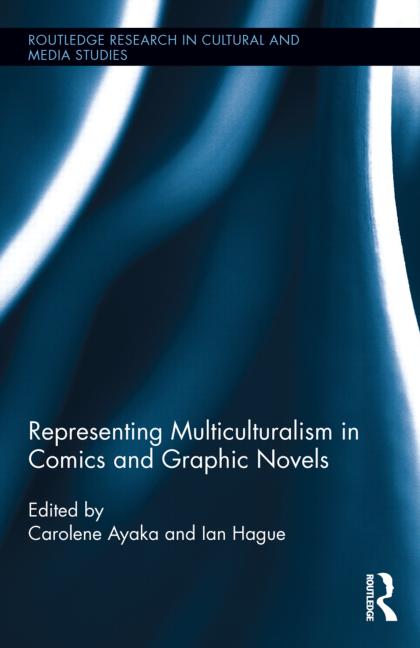
New Book: Representing Multiculturalism in Comics and Graphic Novels

Representing Multiculturalism in Comics and Graphic Novels

A collection of fifteen articles, originally presented as conference papers at Comics Forum 2012, has been published by Routledge as Representing Multiculturalism in Comics and Graphic Novels, edited by CF2012 conference directors Carolene Ayaka and Ian Hague. Here’s the synopsis:

Multiculturalism, and its representation, has long presented challenges for the medium of comics. This book presents a wide ranging survey of the ways in which comics have dealt with the diversity of creators and characters and the (lack of) visibility for characters who don’t conform to particular cultural stereotypes. Contributors engage with ethnicity and other cultural forms from Israel, Romania, North America, South Africa, Germany, Spain, U.S. Latino and Canada and consider the ways in which comics are able to represent multiculturalism through a focus on the formal elements of the medium. Discussion themes include education, countercultures, monstrosity, the quotidian, the notion of the ‘other,” anthropomorphism, and colonialism. Taking a truly international perspective, the book brings into dialogue a broad range of comics traditions.

And here are the contents and abstracts for each of the chapters; a huge thank you to all the authors who contributed to the volume!

  1. Multiculturalism Meets the Counterculture: Representing Racial Difference in Robert Crumb’s Underground Comix

COREY K. CREEKMUR

Although underground comix were recognized as a key component of the 1960s counterculture in the United States, their controversial representation of African Americans suggests an ambivalent relationship between the counterculture and the simultaneous rise of multicultural perspectives following the earlier Civil Rights era.  Focusing specifically on Robert Crumb’s controversial images of African Americans in various underground comix, this article seeks to locate those images in their historical context in order to better understand their frequent recourse to antiquated, “racist” stereotypes in an era otherwise increasingly defined by images celebrating racial identity and difference.  This essay also considers the frequently contradictory claims made about these images within the critical and historical work on underground comix.

  1. The Impact of Latino Identities and the Humanizing of Multiculturalism in Love and Rockets

ANA MERINO

This article analyses the importance of the Hernandez Brothers work as prominent authors of the alternative fiction landscape of comics. Pioneers of multicultural style, they also developed a proto-feminist narrative adulthood in their comics. Over the course of three decades they developed in their work a multicultural sensibility that describes other realities where members of Latino communities are the main characters. They took the risk to represent through comics the contradictions of the American society with a political ethnic conscience.

  1. The Presidential Penis: Questions of race and representation in South African comic and satirical art­­

ANDY MASON

The reproduction of racial and ethnic stereotypes has long played an ideological role in South African comic art. As I have shown in my historical study of South African cartooning (2010), the stereotype of the African male as a threatening savage ‘other’ endowed with prodigious erotic power – a source of both revulsion and admiration amongst the colonial and neocolonial elites – is visible in the early popular visual literature of the colonial period and has endured into the post-apartheid period, where it is used ‘knowingly’ (in the postmodern sense) by cartoonists and satirical artists. But seldom has this tendency been so visible as in a scandalous slew of satirical images in which pictorial representations of Jacob Zuma’s penis were employed symbolically to refer to the state of South African politics and society.

The article examines usages of such imagery by three satirists: Zapiro (Jonathan Shapiro), Brett Murray and Ayanda Mabulu. These usages have all been controversial and hotly debated in the nation’s media, but two instances in particular – Zapiro’s 2008 “Rape of Justice” cartoon, and Brett Murray’s 2012 painting “The Spear” – have aroused unprecedented levels of public response, both angry and appreciative, revealing deep cultural and ideological fissures in post-apartheid society.

Critical theorists in a range of disciplines have taken positions on these two images. For example, journalist Glenda Daniels (2012) examines the lawsuits advanced by Zuma against Zapiro as instances of the ANC government’s intention to intimidate critics and restrict press freedom; cultural theorist Steven C. Dubin (2012) sees the brouhaha around “The Spear” as a vindication of his contention that South African society is riven by “culture wars”; and political geographer Daniel Hammett (2010) visualises public responses to “The Rape of Lady Justice” as an ideological demographic ranged around the cartoon to reveal contestation around the nation’s constitutional project. I also refer to my 2010 article “The Cannibal Ogre and the Rape of Justice” which argues for a reception theory approach to Zapiro’s infamous cartoon.

The article argues that while contextual factors surrounding the production of comic art in South Africa, from the highly repressive apartheid period to the post-apartheid cultural renaissance, have allowed unusual levels of freedom of expression and experimentation, this has unfortunately been accompanied in some cases by intercultural insensitivities that may have had the effect of reinforcing racial attitudes amongst sections of the public, with a deleterious effect on interracial reconciliation. While strongly advocating the right to freedom of expression, the article makes a case for cultural sensitivity amongst cartoonists working in multicultural contexts.

  1. Recognition and resemblance: facture, imagination and ideology in depictions of cultural and national difference

SIMON GRENNAN

This chapter explores the idea that depictions embody their producers and readers in specific relationships between subject, social institution, material and idea, in order to examine depiction in the context of narrative drawings of cultural and national differences. Citing examples of the works of Kerry James Marshall, Dr Lakra and Kunisada Utagawa, among others, the chapter brings together theorisations by Michael Podro, Louis Althusser, Pierre Bourdieu, Robert Hodge and Gunter Kress. The chapter aims to elucidate the roles of imagination and habituation in the production of ideology, considering the implications of objectification in cases where depictions are approached as resemblances of the situations that they depict.

  1. ‘Badgers? We don’t need no steenkin’ badgers!’ Talbot’s Grandville, anthropomorphism and multiculturalism

MEL GIBSON

This chapter investigates how issues around multiculturalism are explored in the Grandville series of graphic novels by Bryan Talbot. Grandville, Grandville Mon Amour and Grandville Bête Noire depict a steampunk world in which animals are dominant and every species is considered equal, whether duck, fish or horse. This does not stop intolerance or prejudice, however. Humans also exist within this world, but are a minority seen by the animals as lesser beings. In considering these relationships and tensions, the chapter first looks at how economics and multiculturalism are linked in Grandville and then turns to a brief consideration of how language and national identity operate. It next looks at Talbot’s use of colour and art as a mechanism for signifying difference and diversity. Finally, it will focus down on issues of cultural intolerance, dominance and the terrorist other.

  1. The Image of the Foreigner in Historical Romanian Comics under Ceauşescu’s Dictatorship

MIHAELA PRECUP

Nicolae Ceauşescu’s humorless and ultra-nationalist dictatorship took its comics seriously, and even held official party meetings in order to establish what children’s magazines—the main space for comics at the time—should publish. Historical comics had to teach a version of the Romanian past that would boost nationalist sentiment and justify a negative perception of the outside, while painting Romania as a country of pure-hearted valiant and hard-working men (and rarely women), permanently assailed by evil forces.

This chapter examines the image of ”the foreigner” in several historical comic strips published in long-standing communist children’s magazines, where foreign nationals were extremely frequent, and generally evil. However, the representational code used by the artists in these didactic cartoons was quite realistic. The most frequently represented episodes from the (proto)Romanian past were the Roman conquest of Dacia (second century AD), the first unification of the Romanian provinces under the same political leadership (1600), a Russian-Romanian battle against the Ottoman Empire (1877), and World War II. The representations of foreigners in communist cartoons showed three main groups: the Romans (morally inferior conquerors of the proud Dacians, the Romanian ancestors), the Germans (always depicted as sly smirking uniformed Nazis, even decades after the end of World War II), and the Turks (Ottomans whose sole purpose was to conquer, pillage, and plunder). The comics contained a mixture of fictitious characters and actual participants in history, all of them treated as if they were equally “real.” During Ceauşescu’s dictatorship, the national superhero was a virtuous man (never a woman, despite the self-proclaimed feminist party line) endowed not only with heightened moral sense and loyalty to a nation whose identity had not yet been articulated, but also with uncommon physical prowess and an uncanny awareness that his bravery would help build something grand in the future, more specifically, Ceauşescu’s Romania.

  1. The Monster Within and Without: Spanish Comics, Monstrosity, Religion, and Alterity

SARAH D. HARRIS

Francisco Goya’s most famous proto-comic, “The Sleep of Reason Produces Monsters” (1799), forms part of a series of prints called Caprices, implying whimsical playfulness. Nonetheless, these prints were far from playful. Meant to reveal, through the interplay of images and ironic captions, insidious social ills, this series suggests Goya’s Spanish contemporaries are more monstrous than the bogeymen they invented. In contrast, more than a century later and published under fascist dictatorial rule, several early 20th century Spanish adventure comics villianize and make monsters of specific religious elements of Spain’s multicultural past. One of the best-known series, Manuel Gago’s The Masked Warrior, (1944-1980) pits a medieval Christian hero against his duplicitous and Muslim murderer-rapist stepfather. Working within the confines of totalitarianism, this comic distances itself, in time and place, from Franco’s modern enemies to promote the same values as its dictator: One Spain, One Race, One Religion. This chapter explores the depiction of monstrosity and alterity from these two divergent moments in Spain. More specifically, it argues that these two examples represent two extremes in a range of practice of using stereotype to represent multiculturalism.

  1. Colonialist Heroes and Monstrous Others: Stereotype and Narrative Form in British Adventure Comic Books

IAN HORTON

This paper explores the representation of colonialist stereotypes and the colonised ‘Other’ in British comic book adventure stories using Edward Said’s theories of Orientalism. From the 1940s to the 1990s comic books, such as the Eagle, Hotspur and Victor, used ‘exotic’ locations and caricatured representations, visual and textual, to maintain these stereotypes and shape narrative structure so continuing the traditions of early 20th century boy’s illustrated magazines. These stereotypes were also central in driving the narrative within more innovative contemporary comic books such as Rogon Gosh and The League of Extraordinary Gentlemen where additionally the image of an eroticised ‘Other’ emerged as a new archetype.

  1. Set Pieces: Cultural Appropriation and the Search for Contemporary Identities in Shōnen Manga

JACOB BIRKEN

When does cultural appropriation become inappropriate? Focussing on contemporary Manga as D.Gray-man, Fullmetal Alchemist or Blue Exorcist, which use European history and Christian ico-nography as an eclectic backdrop or even visual “repository” for fiction, this chapter discusses how eclectic imagery and narratives can be (mis-)interpreted as political practice. Starting out from the historical discourses of post-colonial critique and the post-modern, it aims to analyse how the trope of ‘identity crisis’ and cultural eclecticism in Manga might offer a both critical and utopian counter-part to common models of multiculturalism.

  1. Narrative Exploration against Mentality Issues: Indirect Education for Multiculturalism in Tintin

MARIA-SABINA DRAGA ALEXANDRU

This chapter aims to show that, despite accusations of stereotypical thinking, particularly of racism, Hergé’s classic The Adventures of Tintin is pervaded by the author’s intention to educate his audiences with respect to the world’s plural nature. In its various translations (such as into Catalan, a minority language with a spectacular history of emancipation), the Tintin series has gradually become representative of far more progressive attitudes than the ones it was initially associated with. The changing history of Tintin’s reception also suggests that comic strips can be highly effective in questioning received ideas about the world.

  1. Embracing Childish Perspective: Rutu Modan’s A Royal Banquet With the Queen

LILY GLASNER

Studies on multiculturalism and children usually adopt a paternalistic perspective. This approach doesn’t take into consideration the possibility that a child’s perspective can positively affect the welfare of adults.

This article points to an alternative viewpoint based on the writings of psychologist Alice Miller and psychotherapist Piero Ferrucci. This viewpoint is further explored in light of Rutu Modan’s comic book for children. Modan’s narrative advocates a mutual respect which leads to a genuine dialogue and to a mutual transference of values between children and adults. Thus, in turn, Modan’s comic book enables us to reevaluate children’s role within the frame of multicultural discourse.

  1. An Innocent at Home: Scott Pilgrim and His Canadian Multicultural Contexts

BRENNA CLARKE GRAY & PETER WILKINS

This paper examines the coding of Canada and its relationship to multiculturalism in Bryan Lee O’Malley’s Scott Pilgrim. It both situates Scott Pilgrim in the history of Canadian Superhero comics and the Canadian culture industry and offers a reading of O’Malley’s critique and revision of Canadian identity.

At first read, Scott Pilgrim is a typical story of American youth. The name “Pilgrim” identifies Scott with both the origin story of the United States and atemporal myth. That he must fight a series of epic battles against increasingly threatening foes gives the story a Jungian feel, as though it were a graphic variant of Joseph Campbell’s A Hero’s Journey. Because the American origin story depends on just such a universal, mythical quality, Scott Pilgrim appears to fit into the tradition of redemptive American narratives.

We argue that O’Malley in fact undercuts this apparent universality with “Canadian” signifiers that transform the comic into a mediation of Canada’s relationship to the grand American narrative and more particular cultural micronarratives. Many of these signifiers are visual cues embedded in t-shirts and signs that create a “secret” Canadian language for readers in the know. But the central relationship between Scott and Ramona Flowers is itself such a signifier; it invokes the relationship between Canada and the United States generally, with Ramona the worldly American and Scott the parochial Canadian. This cultural antagonism structures other antagonisms, such as that between Scott and his Chinese Canadian girlfriend, Knives Chau, who holds up a mirror to Scott that shatters the myth of the bland and blond Canadian “nice guy.” In spite of his occupying the structural position of hero in the narrative, Scott is incapable of mastering either the grand narrative or micro-narratives.

Thus, we present the series as a critique of Canadian helplessness in relation to both American hegemony and multiculturalism. This comic really is Scott Pilgrim vs. The World, a battle in which the Canadian hero is a hapless and oblivious slacker who finds himself embroiled in conflict almost by accident, his apparent innocence absolving him of responsibility and engagement.   

  1. The Lower East Side as Mishmash of Jewish Women’s Multicultural Images in Leela Corman’s Unterzakhn

DANA MIHĂILESCU

New York’s Lower East Side has been widely documented in historical literature as a place of diversity rather than a local, limited Jewish phenomenon, in seminal works by Hasia R. Diner, Jeffrey Shandler, Beth S. Wenger and Deborah Dash Moore. I argue that Leela Corman’s 2012 graphic novel, Unterzakhn, complements historians’ works with an unexplored representation of the early twentieth century multicultural Lower East Side, which also touches on the process of assimilation but is primarily filtered through women’s images and private lives. My chapter will trace the graphic novel’s varied and at times controversial representations of womanhood in relation to traditional Judaic Eastern European lore and American mass media views of the early twentieth century by an analysis of three main articles of women’s dress featured in the narrative–head scarfs, shirts-and-waists, and corsets.

  1. They All Look Alike? Representations of East Asian Americans in Adrian Tomine’s Shortcomings and Scenes from an Impending Marriage

EMMA OKI

Adrian Tomine is, along with Derek Kirk Kim, Tak Toyoshima, and Gene Luen Yang, one of the most popular contemporary Asian-American comics creators. He has been praised not only for his artistic and storytelling skills but also for the way he addresses issues pertaining to race and identity. This chapter examines how East Asian Americans, especially those of Japanese descent, are represented in two of Tomine’s works, namely Shortcomings (2007) and Scenes from an Impending Marriage (2011).

  1. Tulips and Roses in a Global Garden: Speaking Local Identities in Persepolis and Tekkon Kinkreet

ALEX LINK

This article examines the way in which both Persepolis (2003) by Marjane Satrapi, and Tekkon Kinkreet (1994) by Taiyo Matsumoto, approach the articulation of local, popular expressions of cultural identity in strikingly similar ways.  On the surface, the narratives seem nothing like one another.  Persepolis tells of growing up in the context of the rise of the Iranian theocratic regime.  Tekkon Kinkreet concerns two superpowered Japanese urchins defending “Treasure Town” from colonization by a diabolical global corporation.  In both cases, however, we encounter narratives that recognize the articulation of cultural identity as contested space, in which popular ownership of that identity has to compete with more powerful or authoritative expressions of it that also lay claim to authenticity.  Both narratives recognize the complexities of speaking cultural identity in a global context, in which such an identity must be fixed enough to be specific, but also fluid enough to accommodate difference and cross-cultural communication.  The two narratives also suggest, in form and content, how both comics and myth offer a bridge between the self-representation of popular, local, cultural identity and its situation and participation in a global context.

At the heart of both Persepolis and Tekkon Kinkreet is the question of who, precisely, can speak cultural identity, and whether, when, and how it might be spoken.  They represent popular voices raised in opposition to, in the former, an oppressive regime that lays sole claim to speaking Iranian identity in collusion with its western antagonists; and in the latter, a potentially homogenizing, or at least disenfranchising, global corporate entity that among other things suggests the global city might be a colonizing culture unto itself. Each defends local specificity against a global entity while drawing from myth as a paradoxically global narrative wellspring of indigenous identity, and from comics as itself an increasingly global medium.

Ultimately, this essay concludes, both narratives make specific cultural content secondary to the right to its expression by popular voices through such popular channels as comics.  In both graphic novels, representing the fluid specificity of cultural identity in a manner that articulates it, and its immediate pressing concerns, without fixing it, shifts narrative emphasis to the fact of, and commitment to, self-representation perhaps above all else, while acknowledging a place in a world of many cultures, stories, and comics styles.

Links

To find out more, or to order Representing Multiculturalism in Comics and Graphic Novels, click here to visit the Routledge product page.

To recommend Representing Multiculturalism in Comics and Graphic Novels to your librarian, click here to be taken to a recommendation form.

If you’re an author or journal editor, and would like to review Representing Multiculturalism in Comics and Graphic Novels, click here to request a review copy (you will need to have a publication venue secured to receive a review copy).

 

Tags: ,