The notion of “materiality” has entered the lexicon of comics studies thanks largely to the work of Ernesto Priego, and Comics Forum sponsored a 2011 conference on the topic of materiality and virtuality in comics. However, I still feel that comics scholars, especially in the United States, have not paid sufficient attention to the importance of materiality. I want to suggest here that one of the reason comics should be interesting, not only to comics scholars but also to scholars of other media, is because of the sort of rich material, embodied and tactile interactions they make possible. Comics help us understand the ways in which reading, whether in print or on a digital platform, is always a materially and physically situated process. Rather than adopting Priego’s thesis that ‘comics as a communicative language has expressed itself as a kind of materiality that is specific to itself and only itself,’ however, I want to suggest that comics help to illuminate the way in which material interaction is a significant factor in our understanding not only of comics but of readable media artifacts in general.
Category Archives: Guest Writers
‘Blueprints for a Forward-Dawning Futurity’: Brynjar Åbel Banlien’s Strîmb Life (2009) and Strîmb Living – 5 Years with Oskar (2011) by Mihaela Precup
‘“I really do believe
future generations can
live without the in-
tervals of anxious
fear we know between our
bouts and strolls of
ecstasy.”’
James Schuyler
(qtd. in José Esteban Muñoz, Cruising Utopia)
The first two books of comics published by Norwegian dancer, choreographer, and comic book artist Brynjar Åbel Bandlien are also the first two and only comics published in Romania that address queer topics.[1] The author embarked on the doubly daunting task of using a medium that was new for him (i.e. comics) and representing a way of living (that he calls strîmb)[2] whose visual presence in Romania is quite scarce. Bandlien’s two fictional autobiographies, Strîmb Life (2009) and Strîmb Living – 5 Years with Oskar (2011), are related attempts to provide a view of what it means to be living a strîmb life, although more often than not they are simply about living a happy life. These two books are welcome interventions in a space of almost complete silence and everyday invisibility, but they are (thankfully) neither didactic to-do lists meant to guide us through the hours and days of a queer life, nor are they exhaustive exercises in defining queerness.
Woodcut Novels: Cutting a Path to the Graphic Novel by David A. Beronä
Jason Lutes’ stunning graphic novel, Berlin: City of Stones, captures a response to the woodcut novel that represents a common reaction by many readers who first open one of these books. In this case, the book Mein Stundenbuch (Passionate Journey) by Frans Masereel is targeted by the character Erich, who is having a heated discussion about objectivity and emotion with his friends. The panels display Erich as he pulls the book from his friend’s coat pocket. In a manner of disgust, Erich presents the book as an example of emotionalism. His attitude changes when he opens the pages and becomes engrossed in the pictures.
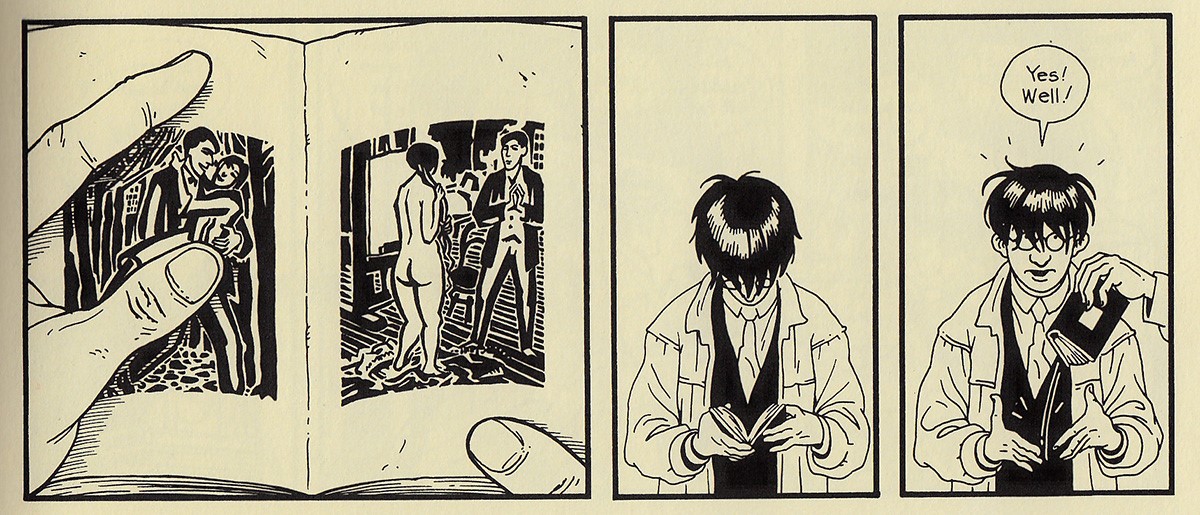
Fig. 1. Berlin: City of Stones. Book One. © Jason Lutes. Used by permission.
Hybrid Languages and Literary forms in Gene Luen Yang’s American Born Chinese by Philip Smith
In his essay on the Chinese Writer and academic Lu Xun (1881-1936), Luo Xuanmin discusses the concept of ying yi (硬译) and yi jie (易解). Lu Xun argued that translation should retain the flavour of the language used in the source text (ying yi), preserving the turns of phrase and poetry of the original.[1] He also argued that Chinese literature needed to adopt foreign linguistic forms which offer syntactical precision (yi jie). He considered classical Chinese, the main literary form in China at his time of writing, to be too dependent on inferred meaning on the part of the reader to serve as an entirely adequate literary form. He wished to import the precise grammatical and semantic forms of European languages into a new Chinese literary language. His ideas were viewed by many of his contemporaries as unpatriotic. Luo Xuanmin encourages an understanding of the work of Asian-American writers through the concept of ying yi and yi jie. He contends that a literature which contains an awareness of both Western and Asian literary and linguistic forms might provide a bridge between the Asian-American experience and that of other American cultures. For such literature to be effective, he argues, it should offer a precision of meaning, and a sensitivity to potential syntactic confusion, negotiating a form which ‘draw[s] nourishment’ (Luo; 2007, 48) from Asian literature and culture. He argues that it is the duty of Asian American writers to work as translators, bringing Asian literature to other languages and cultures.
Thinking about comics scholarship by James Chapman
I would like to use the opportunity of this blog post to offer a few thoughts on the current state of comics research. One thing I don’t feel I have to do on this forum is to explain why comics matter or justify spending time researching them. (That’s not always the case. More than once, while I was writing my book British Comics, I was asked questions like “You mean you’re being paid to read comics?” “Well, no, not as such …” I would start to reply, but the interculotor was usually no longer listening, having already turned to someone else to say “Hey, this professor is paid to read comics, how cool is that!”) But there are points to raise, and issues to discuss, about how we go about researching comics, and in particular whether ‘comics studies’ can be said to be a subject and a discipline in its own right in the way that, say, film studies and television studies are.
 Comics Forum