Tintin at 85 was a one-day symposium at UCL, scheduled for the 85th anniversary of Tintin’s first appearance in Le Petit Vingtième. Organisers Tyler Shores and Tom Ue had been working on a forthcoming academic book on Tintin for a year before the conference, pursuing a personal interest in Tintin, before being inspired to put together a conference after meeting with Moulinsart, the Hergé foundation. This meeting inspired Tyler and Tom to organise a conference which would interest scholars from various disciplines, fans of the Tintin series and the growing number of Tintinologists. In its bringing together of these communities, the symposium was the first of its kind in Anglophone scholarship. With the broad aim of examining and celebrating Tintin’s cultural legacy, the conference attracted a number of international scholars and, most notably, Tintinologist Michael Farr. Farr has written numerous books on Tintin, many of which are in-depth studies of the characters, and he has translated works from Francophone scholarship into English, including those of comics scholar Benoît Peeters.
Tag Archives: bande dessinée
The International Bande Dessinée Society: February 2014 by Lisa Tannahill and Chris O’Neill
The International Bande Dessinée Society (IBDS) was founded in 1999, aiming to encourage scholarly discussion of the French-language comic or bande dessinée, in all its forms. Their journal, European Comic Art, (ECA), is published twice-yearly, with previous issues focusing on national identity, caricature, narration, 19th-century comic art, adaptation and other diverse themes in the European comic medium. IBDS conferences have taken place bi-annually since 1999; the most recent conference was held at the Universities of Glasgow and Dundee in June 2013.
However, English-language bande dessinée scholarship is still in relative infancy, and French-language works are seldom translated. The purpose of this new, twice-yearly column is to draw attention to both recent English-language work on bande dessinée and francophone scholarship which may otherwise go unnoticed in anglophone countries. We do not aim to cover all relevant work; the popularity of bande dessinée in the francophone world means many books on the subject are published every year. Instead we will highlight a selection of the most notable or interesting works which appear throughout the year. In this first edition we will look back at books published in 2013.
Woodcut Novels: Cutting a Path to the Graphic Novel by David A. Beronä
Jason Lutes’ stunning graphic novel, Berlin: City of Stones, captures a response to the woodcut novel that represents a common reaction by many readers who first open one of these books. In this case, the book Mein Stundenbuch (Passionate Journey) by Frans Masereel is targeted by the character Erich, who is having a heated discussion about objectivity and emotion with his friends. The panels display Erich as he pulls the book from his friend’s coat pocket. In a manner of disgust, Erich presents the book as an example of emotionalism. His attitude changes when he opens the pages and becomes engrossed in the pictures.
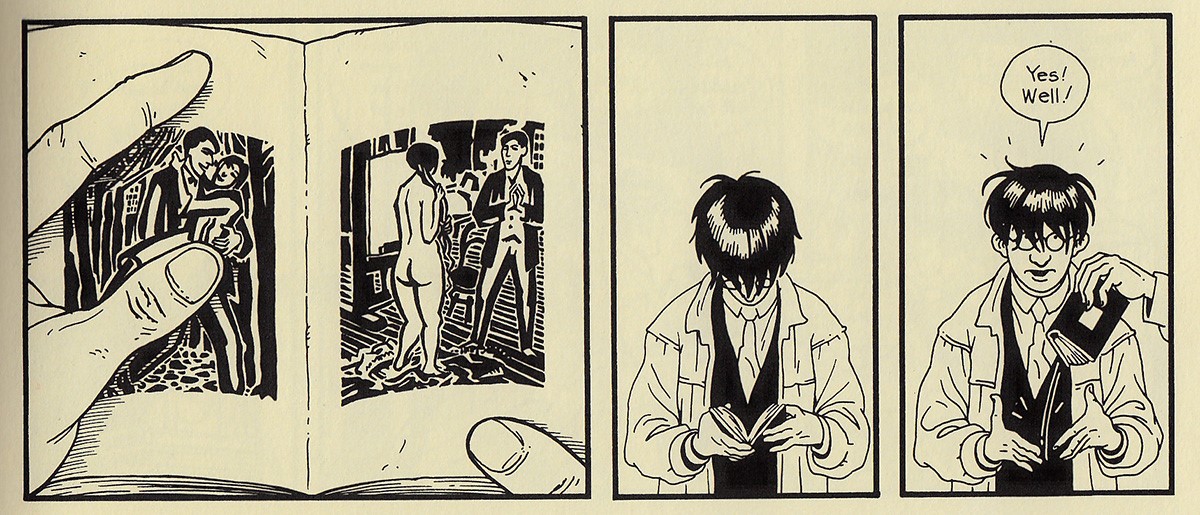
Fig. 1. Berlin: City of Stones. Book One. © Jason Lutes. Used by permission.
On Rewriting Hemingway: Inside Joann Sfar’s Intertextual Web by Fabrice Leroy
Within Joann Sfar’s extremely diverse and prolific comics production, intertextuality constitutes a recurrent device by which an unusually erudite cartoonist weaves in, recycles, and reworks a multitude of literary, philosophical, and pictorial references inside his own whimsical creations. This essay focuses on a micro-sequence from one of Sfar’s early works, his imaginary biography of the Franco-Bulgarian modernist painter Pascin (written between 1997 and 1999, and initially published by L’Association in six short fascicles between 2000 and 2002), in an attempt to explore the various dimensions of Sfar’s habitual borrowing from external sources and integration thereof into his idiosyncratic universe.
A two-page passage of Pascin [1] (181-182) rewrites Ernest Hemingway’s ‘With Pascin at the Dôme,’ the famous description of his encounter with the painter in A Moveable Feast (81-86), Hemingway’s diary account of his experiences as a young expatriate writer in 1920s Paris. Unlike Hemingway’s chronicle of the event, the scene depicted by Sfar is told from Pascin’s point of view, and the extent to which Sfar takes liberties with the intertextual material and reverses not only its perspective, but also the portrayal of the two protagonists, is striking. Contrary to Hemingway’s account, in which Pascin waves to invite him to his table [2], in this version, it is Hemingway who initiates the encounter and intrudes upon the scene, as he ‘stops by to say hello’ to the painter, who is having drinks with two beautiful models at the Café du Dôme, a frequent Montparnasse hangout for 1920s bohemian artists who often referred to themselves as ‘Les Dômiers.’ The young American writer, initially anonymous, then identified parenthetically as Ernest Hemingway, is presented as a sweaty, overweight man with red ears and a mustache, a far cry from the ‘tall, handsome, muscular, broad-shouldered, brown-eyed, rosy-cheeked, square-jawed, soft-voiced young man’ described by his biographer Jeffrey Meyers (Meyers 70). In a sequence of four frames, Sfar summarizes the interaction among Hemingway, Pascin, and the two models in a manner that efficiently synthesizes the writer’s original account, but also distorts it considerably.

 Comics Forum