Tightrope Walker During the Occupation – Part 1/4
by Antoine Sausverd
Translated by Annick Pellegrin
Edited by Harriet Earle
Original publication: Sausverd, Antoine. « Les Aventures du professeur Nimbus : Funambule sous l’occupation. » La Crypte tonique septembre – octobre 2013: 12-18. Print.[1]
Before World War II broke out, in France Les Aventures du professeur Nimbus were one of the most popular bandes dessinées of the 1930s. The gags of this strip feature an always elegant, glassed scientist, whose distinguishing feature is his sole hair, raised as question mark on his bald head. His absent-mindedness, which is nowadays legendary, was the source of many misadventures that made many readers laugh.
The history of bande dessinée would retain that it was the first French mute newspaper strip. It also marks one of its darkest moments. The German occupation that followed the defeat of 1940 would reshuffle the cards of the game in which professeur Nimbus was at stake. Broadly speaking, we know our history but today, it is possible, thanks to the various sources kept in the national archives,[2] to bring to light the then tumultuous relationships between the different actors at the origins of Les Aventures du professeur Nimbus: the press agency Opera Mundi, the artist André Daix and Le Journal, the first daily to welcome the strip in its pages.
Read the rest of this entry »
Tags: bande dessinée, Belgium, Franco-Belgian Comics, La Crypte Tonique, newspaper strips, Translations, WWII
by Philippe Capart
Translated by Annick Pellegrin
Original publication: Capart, Philippe. “École de Marcinelle.” Capart, Philippe. “École de Marcinelle.” La Crypte tonique nov/déc 2012: 21-27. Print.[1]
In 1998, I was thousands of kilometres away from Belgium, poring over a light table in an animation studio under the Californian sun. I had brought with me issues of the magazine Spirou from the late 50s. The magazine contained in its pages some of the most beautiful creations by Franquin, Morris, Tillieux, Roba, Peyo, Jijé. I was trying to share my enthusiasm for these works with my US colleagues. Flipping through the pages of one issue, one of them had this naively violent reaction: ‘Did the same artist illustrate the whole issue?’. Appalled, I went through the magazine with him, trying to explain the profound originality of the authors of my childhood… only to gradually perceive, insidiously, the accuracy of his remark. The noses, the eyes, the ears, the attitudes, the mouths, the speech bubbles, the lettering, the framing, the colours all plotted to reinforce this appearance of uniformity. I was discovering the automatic graphic processes scattered in the pages of the magazine Spirou and that swarmed and gratified us with the famous ‘école de Marcinelle’ (Marcinelle School).[2]
Read the rest of this entry »
Tags: bande dessinée, Belgium, Comics Forum 2016, Franco-Belgian Comics, La Crypte Tonique, Marcinelle School, Translations
Manga [1] does not easily attract scholarly interest as comics. In the name of manga, the critical focus is usually less on sequential art but rather a certain illustration style or character design, and closely related, fannish engagement in transformative or derivative creations (dōjinshi), up to and including cosplay. In many cases, scholars turn to manga as an entry point for research on girls’ (shōjo) culture and female consumers, gender and sexuality, the subcultures of fujoshi (self-designated “rotten girls” engaged in Boys’ Love, or yaoi)[2] and otaku (geeks). Attempts at elucidating the peculiar role of the comics medium in that regard—for example, by focusing not only on “shōjo” but also “manga” when discussing shōjo manga [3] —remain a distinct minority whenever sociological and anthropological concerns prevail. Be it “fan culture,” “subculture” or “scene,” user communities are given preference over media specificity, texts and individual readings, at least outside of Japan. This applies especially to Japanese Studies, which is still the field yielding most manga research abroad. Here, manga is taken to represent, if not national culture in general, then Japanese popular culture, in the main understood as a youth culture with significant global impact and economic effects. Consequently, the utilization of manga as mere object appears to matter more than methodological diligence.[4] Whether subjected to symptomatic readings of social issues or to sophisticated critical theory, media-specific contexts and manga-related expertise tend to be neglected. This is as much due to specific institutional requirements as it is indicative of a lack within the institution, that is, the absence of a respective field of research and criticism.
Read the rest of this entry »
Tags: aesthetics, Alison Bechdel, bande dessinée, Belgium, Benoît Peeters, Boys’ Love, caricature, children readers, CJ Suzuki, comics industry, digital comics, ehon, fandom, formalism, François Schuiten, France, Franco-Belgian Comics, Frederick Schodt, Fujimoto Yukari, Gakushūin University, gekiga, Gender, graphic narratives, Hergé, historiography, humour, Ishiko Junzō, Itō Gō, Japan, Japan Society for Studies in Cartoons and Comics, Japanese manga, jaqueline berndt, Jessica Sugimoto-Bauwens, Kitazawa Rakuten, kodomo manga, komikku, Kyoto International Manga Museum, Kyoto Seika University, manga, manga criticism, manga hyōgenron, manga studies, manhua, manhwa, Meiji University, Miyamoto Hirohito, Murakami Tomohiko, museum, Natsume Fusanosuke, Nicholas Theisen, Nihon manga gakkai, Odagiri Hiroshi, Ono Kōsei, Osamu Tezuka, Paco Roca, ronald stewart, Saitō Chiho, satirical cartooning, Scott McCloud, Shimizu Isao, Takekuma Kentarō, Takemiya Keiko, Takeuchi Osamu, Tezuka, Tezuka Osamu, The Adventures of Tintin, Thierry Groensteen, Tintin, Translations, transmediality, USA, yaoi, Yonezawa Yoshihiro Memorial Library of Manga and Subcultures
The International Bande Dessinée Society (IBDS) was founded in 1999, aiming to encourage scholarly discussion of the French-language comic or bande dessinée, in all its forms. Their journal, European Comic Art, (ECA), is published twice-yearly, with previous issues focusing on national identity, caricature, narration, 19th-century comic art, adaptation and other diverse themes in the European comic medium. IBDS conferences have taken place bi-annually since 1999; the most recent conference was held at the Universities of Glasgow and Dundee in June 2013.
However, English-language bande dessinée scholarship is still in relative infancy, and French-language works are seldom translated. The purpose of this new, twice-yearly column is to draw attention to both recent English-language work on bande dessinée and francophone scholarship which may otherwise go unnoticed in anglophone countries. We do not aim to cover all relevant work; the popularity of bande dessinée in the francophone world means many books on the subject are published every year. Instead we will highlight a selection of the most notable or interesting works which appear throughout the year. In this first edition we will look back at books published in 2013.
Read the rest of this entry »
Tags: Albert Uderzo, Algeria, Algerian war, Angouleme, Anne Goscinny, Anthea Bell, Asterix, Asterix and the Picts, bande dessinée, Belgium, Bertrand Pissavy-Yvernault, Bibliothèque Nationale de France, Caroline Picaud, Christelle Pissavy-Yvernault, colonialism, Danielle Thom, Dominique Maricq, Dupuis, Elisa Renouil, European Comic Art, Fanny Rodwell, France, Franco-Belgian Comics, Franquin, Frans Lambeau, French colonial experience, Gaston Lagaffe, Gilles Ciment, Hergé, Indochina, International Bande Dessinée Society, Jean-Pierre Mercier, Jewish ancestry, Jijé, Joann Sfar, L'Association, La Crypte Tonique, La Véritable Histoire de Spirou, Laurence Grove, Le Petit Vingtième, Lewis Trondheim, Margaret C. Flinn, Mark McKinney, Michael D. Picone, Michael Gott, Michel Daubert, Moulinsart, Musée Hergé, Nicolas Rouvière, pre-war Belgium, Rob-Vel, Serge Gainsbourg, Spirou, The Adventures of Tintin, The Black Island, Thierry Groensteen, Tintin, Vehlmann, WWI, WWII, Yoann
Jason Lutes’ stunning graphic novel, Berlin: City of Stones, captures a response to the woodcut novel that represents a common reaction by many readers who first open one of these books. In this case, the book Mein Stundenbuch (Passionate Journey) by Frans Masereel is targeted by the character Erich, who is having a heated discussion about objectivity and emotion with his friends. The panels display Erich as he pulls the book from his friend’s coat pocket. In a manner of disgust, Erich presents the book as an example of emotionalism. His attitude changes when he opens the pages and becomes engrossed in the pictures.
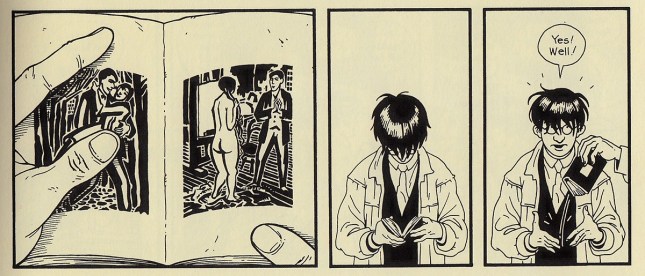
Fig. 1. Berlin: City of Stones. Book One. © Jason Lutes. Used by permission.
Read the rest of this entry »
Tags: Andrzej Klimowski, bande dessinée, Belgium, Berlin: City of Stones, Chris Lanier, Comix 2000, Danijel Žeželj, David Wisner, Die Idee, Ed Badajos, Erez Yakin, Eric Drooker, Frans Masereel, George Walker, Germany, Geschichte ohne Worte, Gods’ Man, Gon, Hans (Giovanni) Mardersteig, Hermann Hesse, James Reid, Jason Lutes, Jim Woodring, Jules Remedios Faye, Kurt Wolff, L'Association, Life of Christ in Woodcuts, Lynd Ward, Marc-Antoine Mathieu, Masashi Tanaka, Mattioli, Mea Culpa, Mein Stundenbuch, Michael Matthys, Otto Nückel, Passion eines Menschen, Peter Kalberkamp, Peter Kuper, Pilipino Food, Scott McCloud, Shaun Tan, Sonne, Squeak the Mouse, Storyteller Without Words: The Wood Engravings of Lynd Ward, The Arrival, The Silent City, Thomas Mann, Thomas Ott, Vincent Fortemps, Will Eisner, Winshluss, woodcut novels, wordless novels

 Comics Forum